
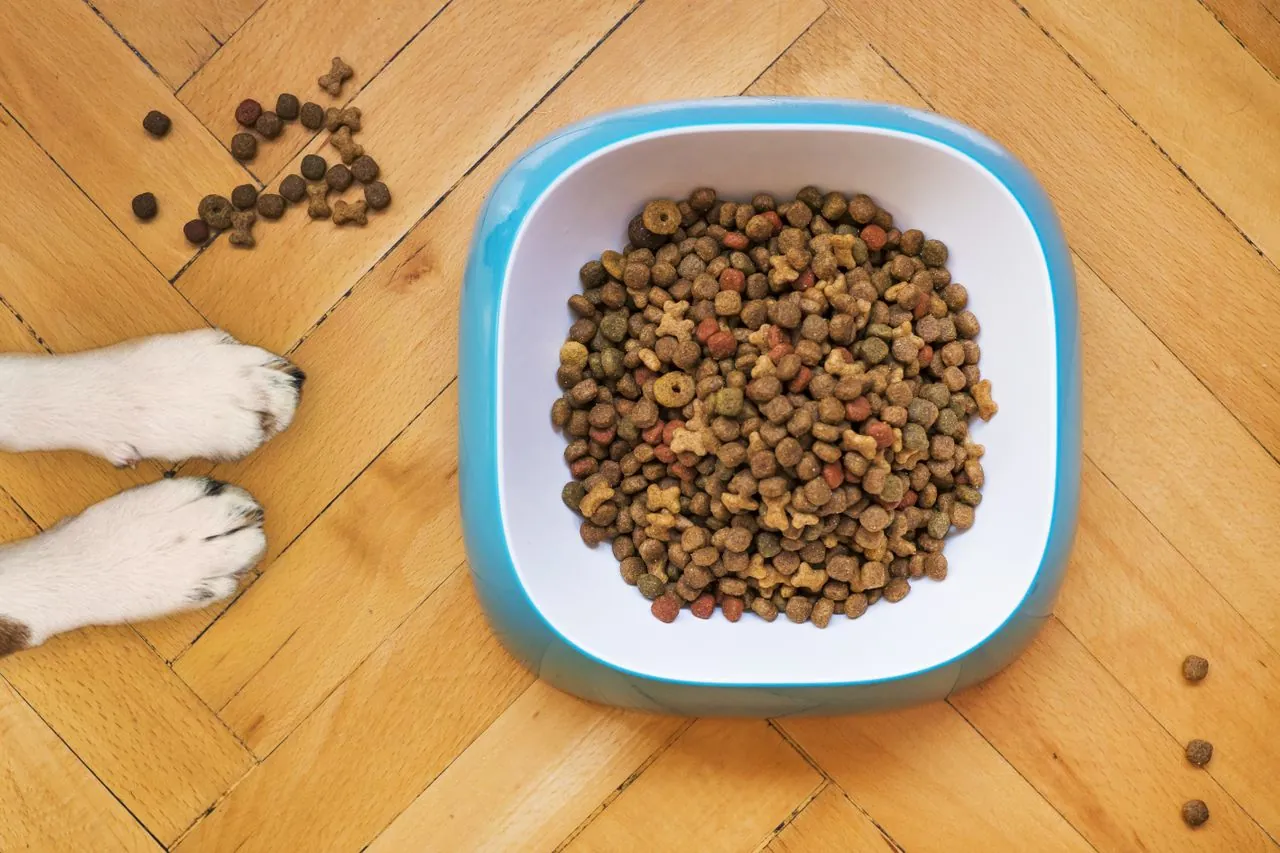
How often a dog eats affects its routine, digestion, and the caregiver's ability to notice changes in appetite. There is no single schedule that suits every dog: age, size, activity level, food type, and health needs can all change the most appropriate pattern.
As a general guide, puppies often need several small meals, while many adult dogs do well with two meals per day. Senior dogs may keep the same frequency, although portions, texture, or timing may need adjustment. The total daily ration remains the main reference.
Age is the first criterion, but not the only one
Life stage helps establish an initial schedule because growth, maintenance, and activity have different demands. A puppy uses resources for development and usually has less ability to go many hours without food. An adult dog needs stable body condition, while a senior may experience changes in appetite, mobility, or digestion.
Size also matters. Small breeds may need a different distribution from large dogs, especially during growth. Exercise, neutering, climate, living with other animals, and food type should also be considered.
How many times should a puppy eat
During the first weeks of solid food, many puppies benefit from four small meals spread regularly through the day. A puppy around two to three months may need four meals; between three and six months, three meals are common; later, some dogs move to two meals.
These ages are not rigid rules. A very small or underweight puppy may need a different schedule. Sudden changes are best avoided, and energy, stools, appetite, and comfort should be observed.
How many meals does an adult dog need
Many adult dogs do well with two meals per day. Dividing the daily ration can support a steady routine and help caregivers notice appetite changes sooner.
For large or deep-chested dogs, avoid one very large meal, rapid eating, or intense exercise immediately afterward. Treats and calorie-containing chews are also part of the daily total.
Feeding a senior dog
Entering the senior stage does not automatically mean changing meal frequency. Many older dogs continue with two meals, but may benefit from stable timing, controlled portions, or easier texture.
Appetite loss, repeated vomiting, persistent diarrhea, or unexplained weight loss require veterinary advice.
How to divide the daily ration
Start by identifying the daily amount recommended for the dog's weight, age, and food. That amount can be split into two, three, or four meals. Do not multiply the recommended ration by the number of meals.
Package tables are starting references, not exact guarantees. Body condition, weight trends, and digestive response help guide adjustments.
Meal times, treats, and food changes
Keeping meal times similar each day improves predictability. Treats should be counted in the daily intake, and part of the regular ration can be reserved for training.
When changing food, a gradual transition is often more comfortable than replacing everything overnight, unless a veterinarian recommends another plan.
Signs that the schedule needs review
Review the schedule if the dog steadily gains or loses weight, seems constantly hungry, regularly leaves food, vomits repeatedly, or has persistent stool changes.
Before changing the amount or food independently, record meals, treats, activity, and stools for several days.
FAQ
How many times a day should a puppy eat?
Many puppies have four meals per day during the first months of solid food. They may then move to three and later to two as they grow.
The exact schedule depends on size, development, weight, and professional advice. Consult a veterinarian if the puppy struggles to eat, vomits, has diarrhea, seems lethargic, or fails to gain weight.
Is it better to feed a dog once or twice a day?
For many adult dogs, two meals make it easier to divide the ration and maintain a practical routine. One meal does not necessarily provide benefits and may not suit every dog.
The choice should fit the individual dog and its health. Large dogs or dogs with special needs may require another frequency recommended by a veterinarian.
Should meal times change as a dog gets older?
Not necessarily. A senior dog can continue with two meals if it has a good appetite, stable weight, and normal digestion. Amount, food type, texture, or nutrient monitoring may change.
Persistent changes in appetite, thirst, weight, chewing, or digestion deserve attention. Changing frequency without investigating the cause can hide a problem.