
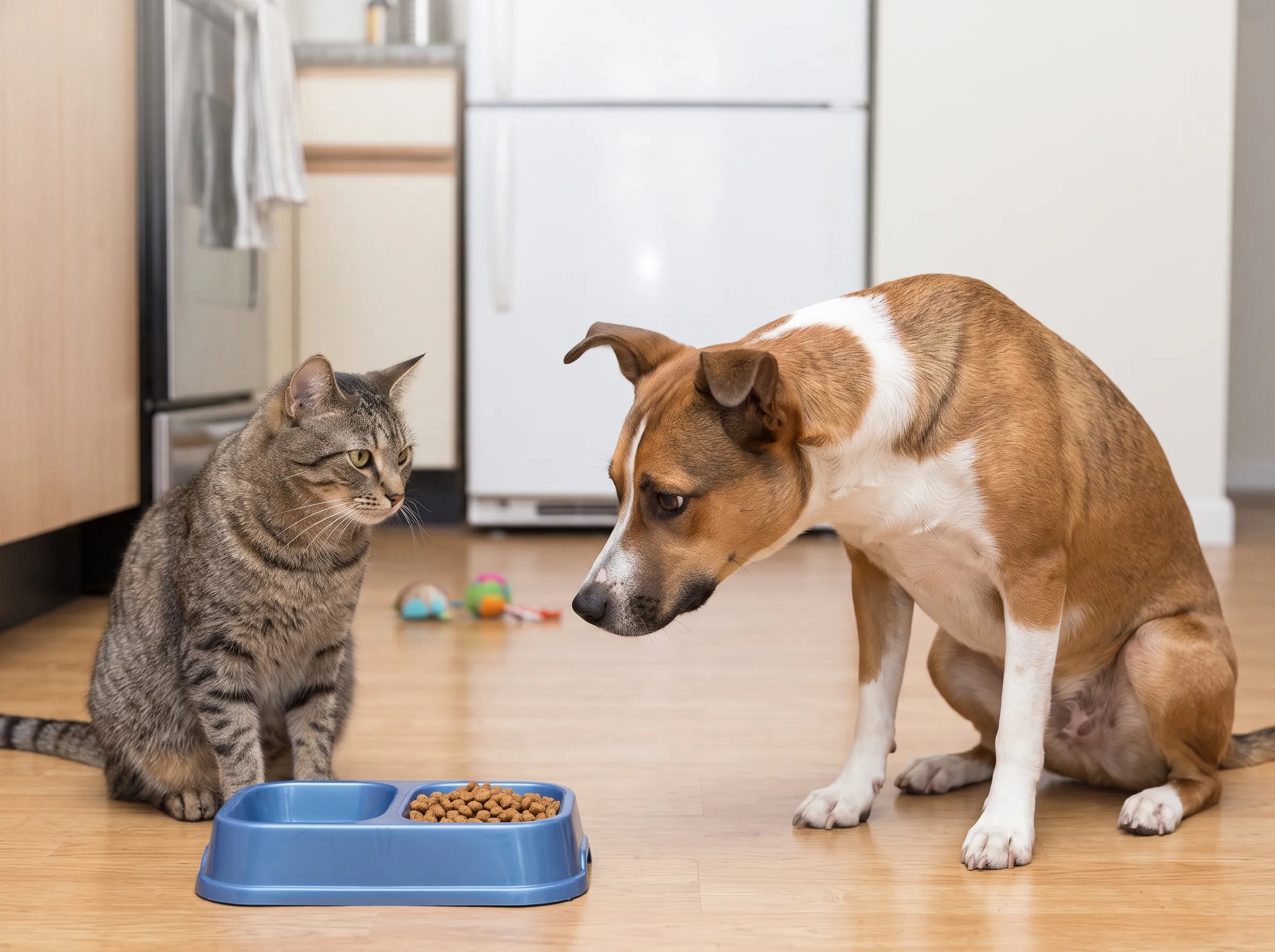
If a dog eats a few pieces of kibble or a little wet cat food, it is not usually an emergency when the amount is small and the dog is healthy. Still, what happens depends on how much was eaten, the dog's size, and its health. Cat food is not formulated to be a dog's everyday diet.
The key difference is between trying it once and eating it repeatedly. A one-off taste may cause no problems, or it may lead to temporary digestive upset; using cat food as a regular substitute can make a dog's diet unsuitable. Watching the dog and knowing when to ask a veterinarian for advice helps caregivers respond without panic or overlooking important signs.
Is cat food toxic to dogs?
In general, cat food is not considered toxic to dogs simply because it is made for cats. Cat and dog foods are formulated to meet different nutritional needs. As a result, cat food may have a different composition and, depending on the product, may be more concentrated in calories, protein, or fat. Recipes vary between brands and types of food.
A dog being able to try a little without becoming ill does not make cat food an appropriate meal. Complete dog foods are formulated for a dog's species and life stage. Cat food should not replace that diet or become a frequent treat without first checking with a veterinarian.
What may happen after a small amount
Many dogs show no changes after eating a few pieces of cat kibble. Others may develop digestive upset, such as soft stools, diarrhea, or vomiting, especially if they ate more than usual or are not used to that food. The amount, the dog's size, sensitivity, and the product's ingredients can all affect the response.
Remove the remaining food and make fresh water available. Over the next few hours, watch whether the dog acts normally, eats and drinks as usual, and remains free of symptoms. Do not try to make the dog vomit or give home remedies; only do so if a veterinary professional specifically advises it.
Why cat food should not be a regular meal
Cat food is designed for feline nutritional needs, not to maintain a dog over the long term. If it regularly replaces the dog's usual food, the dog may receive a diet that does not match its species and needs. Depending on the product and amount, its composition and energy content may also make it harder to manage portions and weight.
Repeated intake may contribute to digestive upset or weight gain if the total food exceeds what the dog needs. A pet with a medical condition, a prescribed diet, or a food sensitivity may need extra care as well. If your dog has been eating from the cat's bowl regularly, tell your veterinarian and ask how to return to a complete dog food.
What to do if your dog has eaten cat food
First, move the food out of reach and estimate how much the dog ate and when. If possible, keep the package or note the product type, since formulas do not all have the same ingredients. Check how your dog is acting and consider its size, age, and health history.
If the dog ate a small amount and seems normal, monitoring is usually enough. Contact a veterinarian if it ate a large amount, has a medical condition, follows a prescribed diet, or starts showing symptoms. Seek veterinary care promptly for repeated vomiting, severe or persistent diarrhea, pain, weakness, blood in the stool, or marked lethargy. If you are concerned about your dog's condition, do not wait for it to get worse.
How to prevent it from happening again
In homes with both dogs and cats, feeding them in separate areas can reduce food stealing. It also helps to offer meals at supervised times, remove the cat's bowl when the cat is finished, and keep bags or cans closed and out of the dog's reach.
If the cat needs access to food during the day, place its bowl on a surface or in a room the dog cannot access, as long as that setup is safe and comfortable for the cat. Avoid punishing the dog for approaching the food; managing access and keeping a clear routine is usually more effective.
Frequently asked questions
What if my dog ate a few pieces of cat food?
A small, one-off amount can usually be monitored at home in a healthy dog. The dog may show no symptoms, though mild digestive upset is also possible. Remove the food and keep an eye on how your dog is doing.
If repeated vomiting, significant diarrhea, weakness, or another concerning change appears, call a veterinarian. If your dog has a medical condition or a special diet, ask for advice even if the amount seemed small.
Can I give cat food to my dog as a treat?
It is not recommended as a regular treat. Cat food is designed for cats and may provide a different amount of energy or nutrients than is appropriate for a dog. A small portion of the dog's own food or a treat made for dogs is a better choice.
If you are looking for options for a dog with special needs, check with your veterinarian before adding other foods. This helps avoid interfering with a therapeutic diet or existing feeding instructions.
Should I call the veterinarian if my dog ate cat food?
It depends on the amount, the product, and how your dog is acting. If it was a small taste and your dog is behaving normally, you can usually monitor it. Keep the package and details about the ingestion nearby in case you need to ask for advice.
Call a professional if your dog ate a large amount, has a medical condition, follows a prescribed diet, or develops symptoms. For severe or worsening signs, seek veterinary care without delay.