
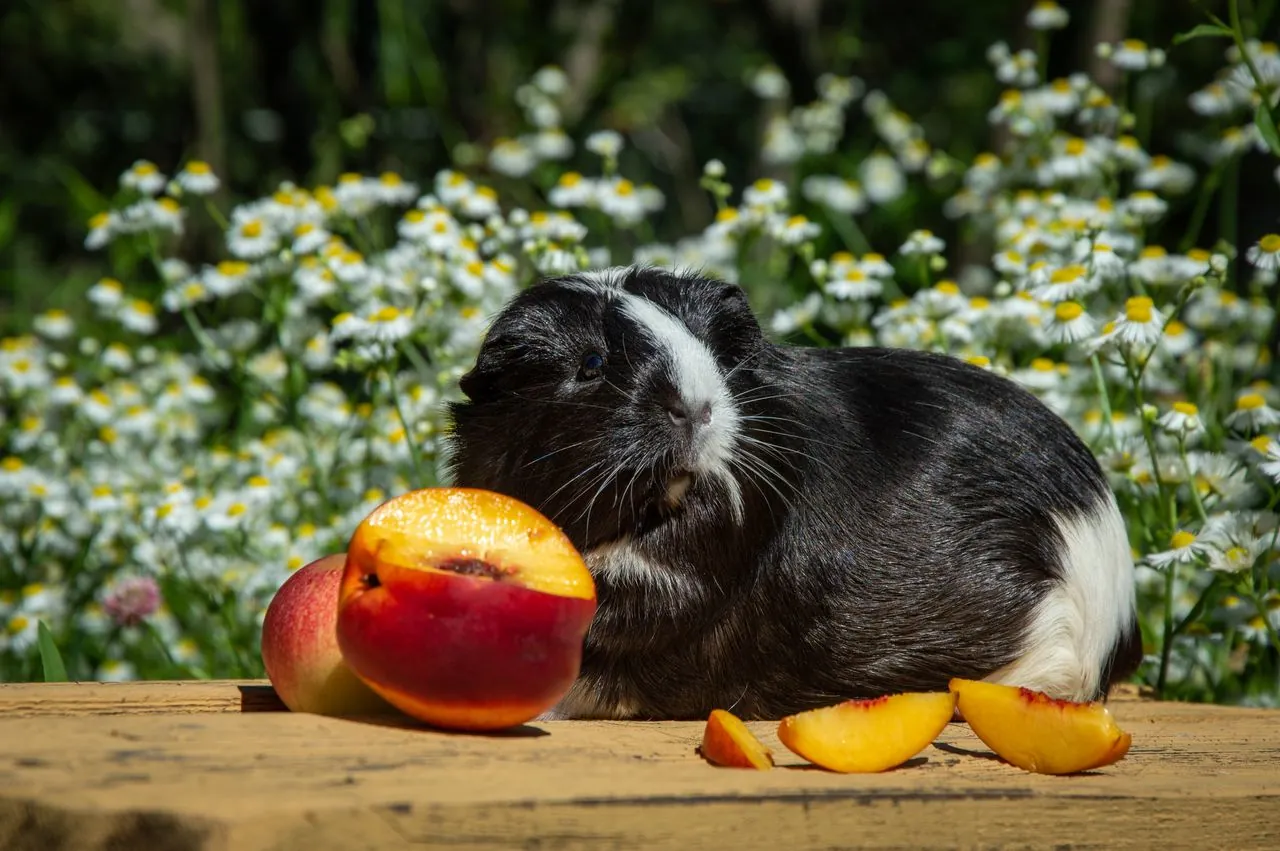
Guinea pigs need a fiber-rich diet and, unlike most mammals, they cannot produce vitamin C themselves. That is why fresh fruits and vegetables are not just an extra: they are the main way to cover that vitamin while adding water and variety. The important detail is that not every vegetable is safe, and some that look harmless can cause gas, diarrhea, or urinary problems.
This guide summarizes which fruits and vegetables a guinea pig can eat, in what amounts and how often, along with the foods that should be ruled out entirely.
The foundation of the diet: hay comes before vegetables
Before handing out greens, it helps to remember the main rule: grass hay should be available at all times and make up the largest share of the diet. Fresh vegetables complement hay with vitamins and water, but they do not replace it. A guinea pig that eats lots of vegetables and little hay tends to develop dental wear problems and digestive irregularities.
As a practical reference, an adult typically gets about one cup of vegetables per day, split into two servings, while fruit is reserved as a treat once or twice a week. The more sugar a food contains, the smaller its place in the routine should be.
Safe vegetables for everyday feeding
These vegetables can be offered regularly because they are low in sugar and provide a good balance of water and vitamin C:
- Red, green, or yellow bell pepper, without seeds or the stem: one of the most practical sources of vitamin C.
- Romaine or green leaf lettuce, to add hydration without extra sugar.
- Chicory (endive), escarole, lamb's lettuce, and arugula as fresh leaves.
- Raw cucumber and zucchini, sliced thin.
- Carrot in moderate amounts, since it holds more sugar than it seems.
- Celery in small pieces, after removing the toughest strings.
- Fresh herbs such as cilantro or basil; parsley, better kept occasional due to its high calcium content.
Variety helps prevent deficiencies, but it makes sense to keep the daily mix weighted toward leafy greens and to add bell pepper as a companion, since it covers much of the vitamin C requirement. Vegetables should be washed well and served at room temperature.
Safe fruits as an occasional treat
Guinea pigs tolerate fruit well, but it is sugary and calorie-dense, so it works better as a treat than as a staple. A practical portion for an adult is about one tablespoon, once or twice a week. Before serving, remove seeds and pits, which are not edible.
Common, well-accepted options:
- Apple and pear, always without seeds.
- Strawberries and blueberries, washed and whole or halved.
- Melon and watermelon, in small pieces without seeds.
- Kiwi, peeled and in reduced portions.
- Orange or tangerine, in small amounts: acidity can soften the stool if given too often.
- Banana, only now and then, due to its sugar content.
If the animal is not used to fruit, start with minimal amounts and watch its digestion before repeating.
Foods that are off-limits for guinea pigs
Some foods are directly toxic and should never be offered, no matter how eagerly the guinea pig takes them:
- Onion, garlic, leek, and chives, in any form.
- Raw potato and any green tuber or sprout.
- Rhubarb and avocado.
- Fruit seeds and pits, such as those from apples, peaches, or cherries.
- Tomato leaves and stems.
- Raw beans and store-bought seed mixes.
- Animal products, dairy, bread, and any processed food.
Iceberg lettuce deserves a separate mention: it is not toxic, but it offers very few nutrients and can cause diarrhea, so it is better replaced with romaine or green leaf lettuce. When in doubt about a specific vegetable, the prudent option is to leave it out and check with the veterinarian.
How to introduce new foods
A guinea pig's digestive system reacts poorly to sudden changes. When adding a new vegetable, do it one food at a time and start with a piece the size of a fingernail. During the next 24 to 48 hours, check the droppings: if they soften or diarrhea appears, remove that food and wait for the gut to settle down before trying again.
Also, serve portions in a clean dish and remove leftovers within a few hours, especially in warm weather, to avoid fermentation. These habits keep the routine safe and make it easier to identify which food caused a problem if one appears.
Frequently asked questions
How many fruits and vegetables does a guinea pig need each day?
The usual reference for an adult is about one cup of vegetables per day, split into two servings, alongside hay available at all times. Within that amount, it makes sense to combine leafy greens, one vitamin C-rich vegetable, and one hydrating option such as cucumber, without repeating the same selection every day.
Fruit follows a different rule: once or twice a week in a small portion, about one tablespoon. This keeps sugar intake low and preserves fruit's role as a treat, without displacing hay or vegetables.
Can guinea pigs eat spinach or celery?
Yes, both foods can be offered, but in small amounts and not every day. Spinach carries a lot of calcium and oxalates, so sustained excess favors the formation of urinary stones; it works better as an occasional green, rotated with endive or escarole.
Celery is safe once the tough strings are removed and it is well washed, cut into small pieces. Because it is very watery and low in nutrients, it should be combined with other vegetables rather than served alone.
What should I do if my guinea pig eats a forbidden food?
The response depends on the amount and the food involved. After a small one-time intake, the reasonable step is to observe the animal during the following hours: confirm it keeps eating hay, stays active, and that its droppings remain firm. Remove all the suspect food and offer only hay and water.
See a veterinarian experienced with exotic animals if diarrhea, shapeless droppings, apathy, food refusal, or pain when the abdomen is touched appear, and also if the guinea pig has eaten a considerable amount of something toxic such as onion, avocado, or rhubarb. To prevent repeat incidents, store these foods out of reach and share the forbidden list with everyone who helps feed the animal.
Conclusion
A guinea pig's diet rests on hay available at all times, fresh vegetables daily, and fruit only as an occasional treat. With proper portions, a gradual introduction of new foods, and a clear list of forbidden items, vegetables do their job: covering vitamin C and adding variety without compromising the animal's digestive and urinary health.