
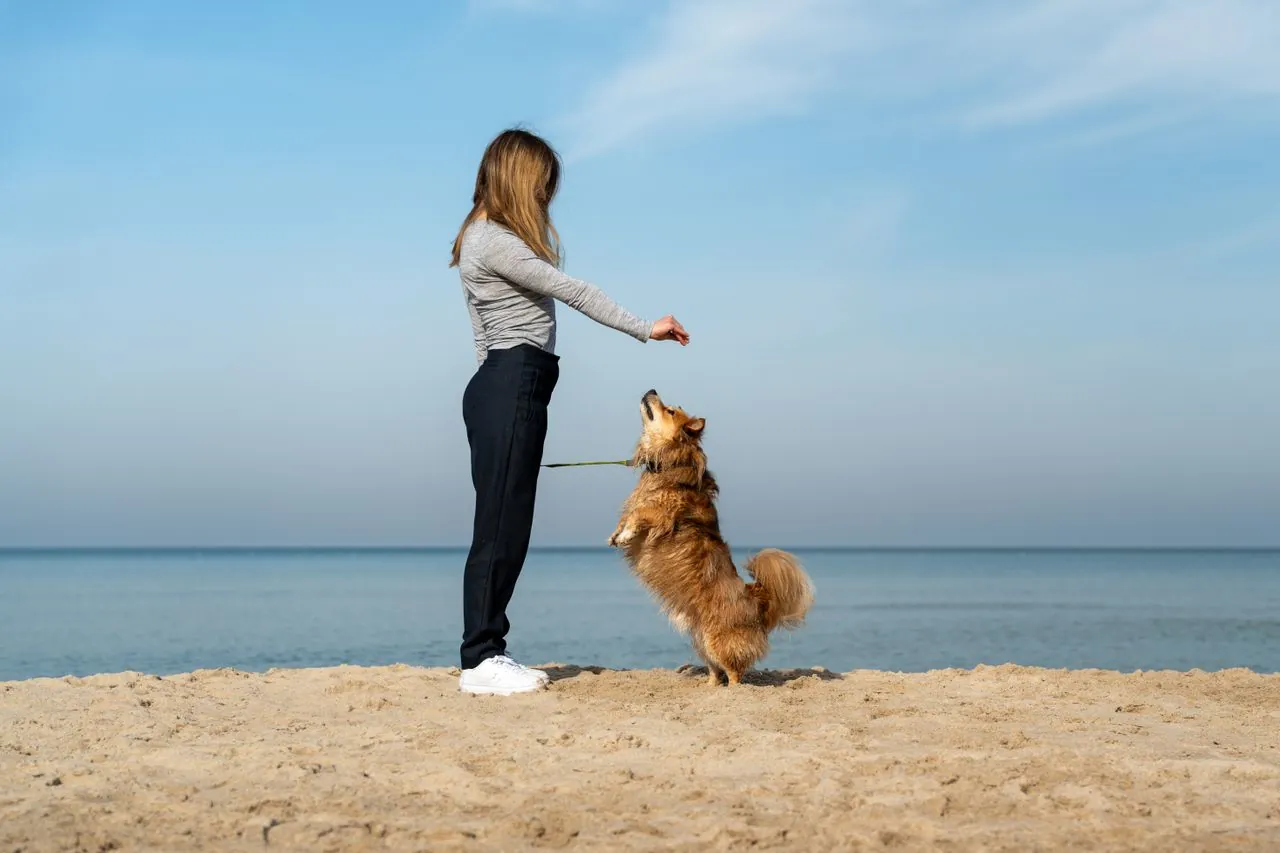
Training does not have to be a series of isolated commands. When it is presented as a shared game, it can help a pet understand its caregiver, make choices, and participate voluntarily. The activity teaches more than individual behaviors: it also builds a history of predictable, rewarding experiences.
For that effect to develop, the game must fit the species, age, physical condition, and experience of the animal. A dog may search for objects or practice a recall, while a cat may follow a target or explore a simple puzzle. In both cases, interaction quality matters more than the number of exercises completed.
What makes a game strengthen the bond
A good training game has a clear goal, gradual difficulty, and a reward that matters to that particular pet. The reward may be food, play, access to an area, affection, or the chance to continue an enjoyable activity. Not every pet values the same things, and observing those preferences is part of training.
The interaction must also allow the animal to leave. Continuing when it shows discomfort can weaken trust even if the exercise seems easy. The bond grows when the pet learns that its caregiver notices signals, adjusts difficulty, and keeps rules consistent.
Build short, predictable sessions
Before starting, choose a low-distraction area, remove hazards, and prepare treats or toys. Early sessions should be brief. It is better to stop after several successful responses than to continue until frustration or fatigue appears.
- Present a familiar cue and wait for an easy response.
- Reinforce the behavior immediately.
- Add one small variation, such as distance, duration, or distraction.
- Return to an easy exercise and finish successfully.
The right length depends on the animal. Some pets work well for ten minutes, while others need one- or two-minute intervals. The main criteria are continued interest, clear responses, and the ability to relax afterward.
Choice games: let the pet participate
A choice game presents two safe options, such as two toys or treats, and observes which one the pet selects. The caregiver can then use that choice to begin a brief activity. With dogs and cats, this practices orientation and communication without turning every interaction into a demand.
The choice must be genuine. If the pet walks away, looks elsewhere, or shows no interest, end the session or change the activity.
Search and scent games
Hiding part of a meal or a toy in easy-to-find places encourages exploration and attention. At first, the object should remain visible. Later it can be partly covered or placed in a familiar room. Increase difficulty only when the pet understands the task.
- Use safe materials and supervise throughout.
- Do not hide perishable food.
- Avoid small objects that can be swallowed.
Teach the pet to touch a target
A target can be an open hand, a training wand, or a large safe surface. Present it at a short distance and reinforce any voluntary approach. Later, ask the pet to touch it with its nose, paw, or beak, depending on the species.
This game can support moving the animal, stepping onto a scale, entering a carrier, or changing position without pushing. Stop if fear, avoidance, or sudden movements appear.
Turns, waiting, and self-control
Turn-taking games practice waiting without demanding stillness for too long. Waiting is built in seconds, not minutes. In homes with several animals, turns also reduce competition for resources.
Recall games and returning to calm
With dogs, say a recall cue once in a secure setting, move away a few steps, and reinforce the arrival. With cats and other pets, the equivalent may be going to a station or entering a carrier voluntarily. Rest is part of self-regulation.
Mistakes that reduce trust
Increasing difficulty too quickly, repeating cues, using physical punishment, or continuing after the pet loses interest can harm the relationship. If behavior changes suddenly, aggression appears, pain is possible, or the pet stops enjoying activities, consult a professional.
Track progress without creating competition
Progress may appear in small signals: the pet approaches sooner, recovers faster from distraction, accepts brief handling, or leaves the game without frustration. A simple record can note the activity, duration, difficulty, and observed response.
FAQ
Which games are suitable for starting training?
The best starting games produce easy responses that can be reinforced quickly. Following a target, choosing between two objects, finding a visible treat, or going to a station can be adapted to different pets.
Difficulty should increase gradually. If the animal fails several times, walks away, or stops accepting the reward, simplify the exercise.
How long should a training session last?
There is no universal duration. An effective session may last from one or two minutes to ten, depending on species, age, health, and experience.
End before exhaustion or frustration appears. Finishing with a familiar behavior helps preserve a positive association with training.
Can the bond be strengthened without using food?
Yes. The reward can be a toy, affection when the pet seeks it, access to an exploration area, a pause, or the opportunity to continue a game.
Food is practical for new behaviors, but it should not be the only form of interaction. Varying rewards helps caregivers understand preferences and keeps sessions flexible.