
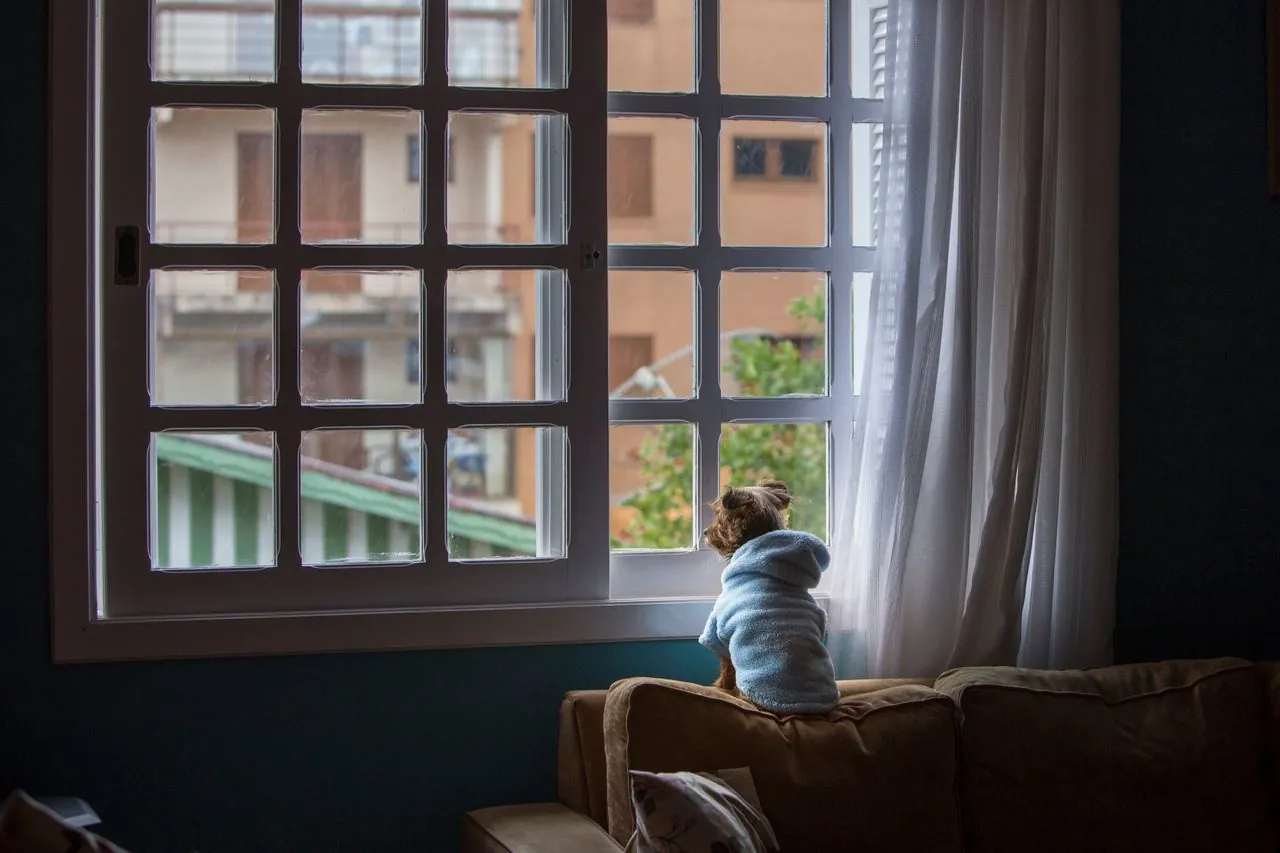
Staying home alone is not something a dog accepts automatically: it is a skill that has to be learned. A puppy, a recently adopted dog, or a dog that has never spent time without company may show restlessness at first, even during very short absences.
The key is to move forward in stages: prepare a safe space, practice absences of a few seconds, and increase the time only when the dog stays calm. Forcing a long absence from the first day tends to create more stress and slow the process down.
Understanding what staying alone means for a dog
Dogs are social animals and usually feel safer near their group. Learning to stay alone means tolerating separation without distress, and that takes gradual practice, not willpower alone.
It helps to distinguish temporary discomfort from separation anxiety. A dog that whines for a few minutes at first or sleeps while the caregiver is out may simply be adjusting. Separation anxiety, by contrast, usually involves continuous vocalization, drooling, escape attempts, destruction around doors and windows, or refusing to eat while alone.
Age, previous history, and exercise also matter. A dog that is left alone after a walk and a scent activity is often more ready to rest than one with pent-up energy.
Preparing the space and the routine
Before practicing absences, decide where the dog will stay. The space should have water, a comfortable bed, a suitable temperature, and limited access to objects the dog can break or swallow. If a crate is used, it must be the right size and should have been introduced earlier as a pleasant place, never as punishment.
A predictable routine before leaving reduces uncertainty: a walk with time to sniff, a chance to urinate, and a calm activity before departure work better than a rushed exit. A stuffable toy or a safe chew can provide occupation during the first minutes.
It also helps to review the environment: close the curtains if the dog barks at what it sees and avoid unexpected loud noises. A radio or television at low volume can mask outside sounds, although it does not replace training.
Starting with very short absences
Training starts with departures the dog can tolerate without distress. At first they may last only seconds: pick up the keys, open the door, step out, and come back. Repeating the exercise several times a day, calmly, helps those cues stop predicting a long absence.
Then increase the time in small steps: one or two minutes, then five, and so on. Two or three short absences are more effective than one long outing. If the dog stays calm, you can move forward; if it whines, scratches the door, or pants, reduce the duration and repeat an earlier step.
Goodbyes and returns should be brief and neutral. Leaving with a lot of excitement or greeting the dog with a big celebration increases the difference between being accompanied and being alone. On return, the most useful approach is to come in calmly, avoid intense play during the first few minutes, and pay attention when the dog is relaxed.
Increasing the time gradually
Progress depends on what the dog can handle, not on the calendar. A practical rule is to extend the absence in small increments, only after several calm repetitions. If there is a setback, there is no need to start over: return to a duration the dog has tolerated well and move forward again more slowly.
A camera or monitoring app helps show what happens during the absence. It also helps to vary the time and length of departures slightly so the dog does not link a fixed sequence to an inevitable absence. Some dogs need weeks and others months, especially if they have a history of abandonment or anxiety.
The goal is not for the dog to endure as much time as possible without company, but to stay alone for the time it needs with low stress.
Common mistakes
One of the most common mistakes is rushing the process because of a deadline. Another is punishing the dog on return if it has chewed something or barked: the dog does not connect the punishment with behavior that happened minutes earlier, and the result is usually more fear and more anxiety.
Other common mistakes are using the crate only when the caregiver leaves, leaving the dog in an unfamiliar room, removing enrichment toys abruptly, or expecting a puppy to hold its bladder for many hours. Anti-bark collars and punishment do not resolve distress and can make it worse.
When to seek professional help
Consult a veterinarian if the dog shows clear signs of separation anxiety: constant vocalization, excessive drooling, destruction aimed at doors and windows, escape attempts, self-injury, or inability to eat while alone. The veterinarian can rule out health problems and assess whether pain or another medical condition is involved.
A dog trainer or behavior specialist who uses positive reinforcement can design a gradual desensitization plan. Medication, when considered necessary, must be prescribed and supervised by a veterinarian; it is not a shortcut but a support that can make learning easier in severe cases.
FAQ
How long does it take a dog to get used to staying home alone?
There is no single timeline. A young dog with previous experience and a stable routine may accept short absences within days or weeks; another dog with separation anxiety or a history of abandonment may need months of gradual work. Age, temperament, and the dog's history matter as much as the technique.
The most useful measure is minutes of calm, not days elapsed. If the dog tolerates ten minutes calmly and only five the next day, progress still exists; what matters is not comparing its pace with another dog's.
How many hours can a dog stay home alone?
There is no single figure. A healthy adult dog usually copes better with absences of four to six hours if it has had exercise and has access to water, while a puppy needs much more frequent breaks because its bladder is not fully developed. Age, size, health, and temperament change that reference.
Beyond the number of hours, the quality of time together and the chance of a break halfway through matter. If the workday is long, arrange a walk or a visit at midday before asking the dog to handle a long absence.
Is it better to leave the dog in a crate or loose at home?
It depends on the dog and the available space. A properly introduced crate can be a safe refuge and prevent access to cables or hazardous products, but only if it is the right size and the dog already accepts it without fear. It should not be used to keep the dog confined for many hours or as punishment.
If the dog becomes stressed in the crate, a small dog-proofed room is often a better alternative. In both cases, the space needs water, a rest area, and nothing the dog can break or swallow. Camera observation helps decide which option is safer.
Conclusion
Getting a dog used to staying home alone is a gradual process, not a test of endurance. A safe space, a predictable routine, increasingly longer absences, and a calm return home allow progress without force. If signs of intense anxiety appear, consulting a professional is part of the plan, not a failure.