
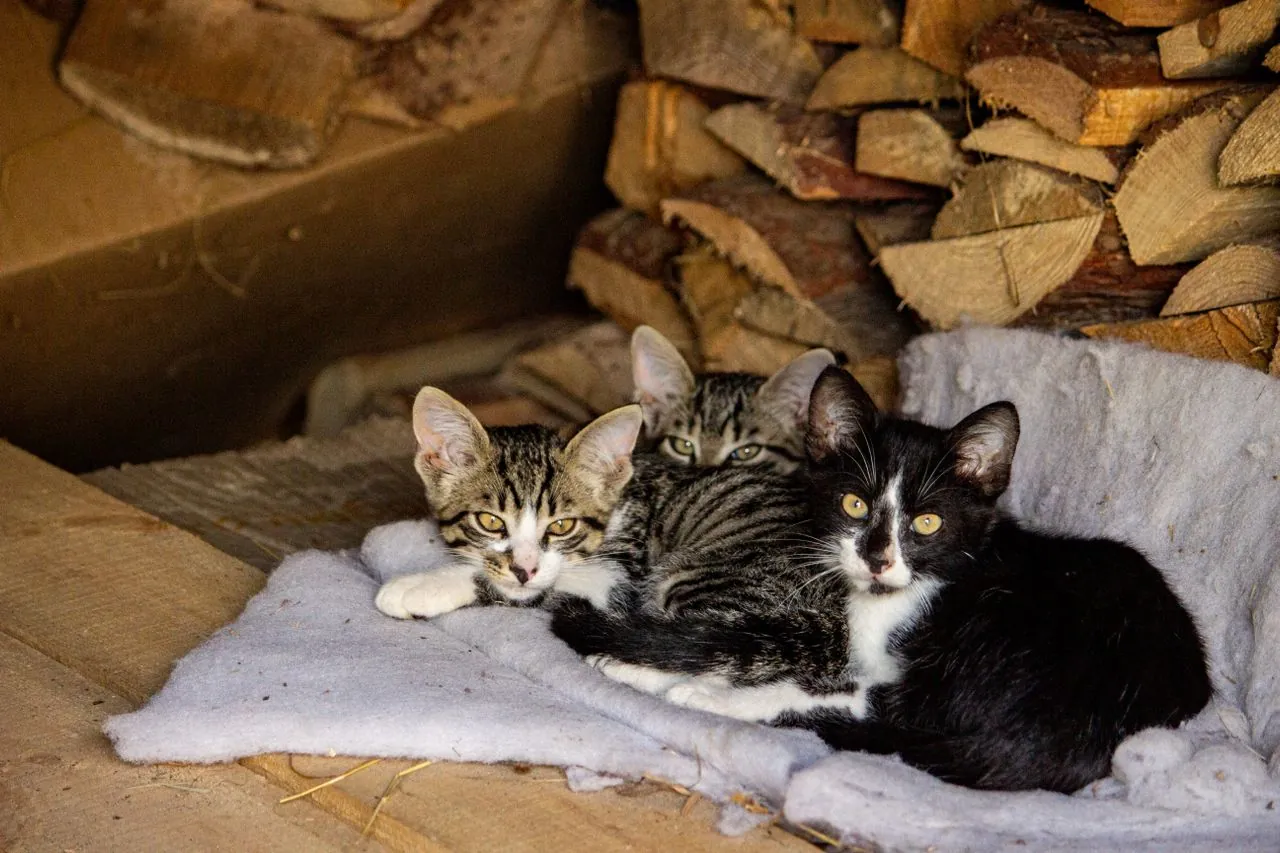
Talking about the European common cat does not mean talking about an exotic breed or a fully uniform profile. In practice, the term is often used for many short-haired domestic cats that do not come from strict pedigree selection but are widely present in homes and urban environments. Precisely because they are so common, many people take them for granted and assume there is little to explain. Their familiarity, however, does not make them simple cats or identical to one another.
For a caregiver, understanding the European common cat is useful because it helps separate stereotypes from real coexistence. This is not a cat that automatically fits any context just because it is common. As with other cats, its well-being depends on how the environment is organized, how steady the routine is, and how well the caregiver reads its needs instead of reducing it to a broad label.
What people mean by European common cat
The name European common cat is often used broadly for domestic cats of varied build, usually short-haired, that do not belong to a tightly standardized breed. That means there can be considerable diversity in color, coat pattern, body type, and facial expression. What these cats share is not one exact mold, but a long and familiar relationship with human environments.
That lack of strict uniformity matters. Unlike some breeds with highly fixed physical traits, the European common cat does not always correspond to one silhouette or one expected temperament. It helps to treat the term as a general reference rather than a behavioral guarantee. Two cats described this way may differ a lot in energy, tolerance for handling, or the way they explore a home.
It also helps to remember that common does not mean lesser. Because these cats do not carry the label of a famous breed, they are sometimes left out of deeper conversations about behavior and care. Yet for people living with one, the practical questions are the same: how it adapts, what it needs to feel secure, and how comfort or stress show up in daily life.
Physical appearance and coat variety
One of the first traits of the European common cat is precisely its physical variety. The coat may be tabby, bicolor, black, white, orange, tricolor, or a less predictable combination. Fur texture is often short or moderately dense, and the body can range from light and slim to more solid and sturdy depending on individual genetics, feeding, and activity level.
In broad terms, this is often an agile, balanced, and functional cat. The body usually does not show the marked exaggerations in muzzle, leg length, or skull shape that appear in some selectively bred cats. That more practical build is often linked with good jumping ability, exploratory behavior, and adaptation to the everyday movement of a household.
Even so, speaking about a functional build does not mean assuming all individuals have the same resilience or the same needs. Coat condition, body weight, muscle tone, and ease of staying active depend heavily on living conditions. A European common cat living indoors with little stimulation and a disordered routine can look very different from one that has regular play, stable rest, and an environment that better supports normal feline behavior.
Frequent behavior patterns and individual differences
Many people describe the European common cat as balanced, curious, and independent. That description may work as a starting point, but it should be used carefully. Daily life with a cat depends more on its experience, early socialization, and current environment than on a generic idea linked to its type. Some are highly social and seek frequent contact, while others prefer to observe from a distance and approach only when they still feel in control.
What often does appear is strong engagement with the environment. These cats usually benefit from windows, vertical space, hiding options, scratching surfaces, and predictable routines. When those elements are missing, boredom, hypervigilance, or disorganized activity may appear and are sometimes misread as bad temperament.
It is also useful to remember that independence does not mean detachment. A cat may not demand constant attention and still be deeply affected by schedule changes, noise, moving house, or tense coexistence with people or other animals. In many European common cats, the bond is expressed in quieter ways: following the caregiver, resting nearby, watching from a shelf, or asking for contact only at specific moments. Understanding those forms of closeness helps avoid measuring trust only through continuous petting.
What it needs in everyday life
In daily life, the European common cat usually needs the same foundations as any well-cared-for cat: security, well-distributed resources, enough stimulation, and a reasonably stable routine. Clean water, suitable food, a hygienic litter box, resting areas, and scratching surfaces are not optional extras. They are the minimum base that lets the animal organize its behavior without constant friction.
Environmental enrichment also matters. The fact that this is a common and apparently adaptable cat does not mean it can thrive in a flat environment with no real opportunities to explore. Shelves, hiding places, short but regular play, and observation points at height often make a major difference to quality of life. For indoor cats, these measures also help prevent apathy and some of the tension associated with unused energy.
Coexistence improves further when the caregiver respects individual rhythms. Not all cats want to be handled in the same way, and not all tolerate visitors, noise, or furniture changes equally well. Watching when the cat seeks interaction, when it needs distance, and how it reacts to routine usually helps more than trying to fit it into a prefabricated personality.
Differences compared with a selectively bred cat
Comparing the European common cat with a selectively bred cat can be useful as long as it does not turn into a hierarchy. The main difference is that many pedigree breeds have had certain physical and behavioral traits reinforced over generations through more specific standards. In the European common cat, variation is wider and there is less room to predict an exact profile from the label alone.
That does not mean the cat is unpredictable by default. It means that individual observation becomes even more important. While some people choose a breed because they hope it will tell them precisely what coexistence will be like, with a European common cat it is usually more sensible to focus on the real individual: activity level, interaction style, tolerance for handling, and response to novelty.
From a care perspective, this difference is a reminder to avoid rigid expectations. The useful question is not whether a European common cat is better or worse than a pedigree cat, but what that particular animal needs in that particular home. When the caregiver works this way, the absence of a closed standard stops being a problem and becomes an advantage: the cat can be read as it is, not as it is assumed to be.
FAQ
Is the European common cat a breed?
That depends on how the term is being used. In everyday language, it often refers to very common domestic cats, especially short-haired ones, that do not belong to a selectively bred line with strict standards. In practice, many people therefore use it more as a broad type category than as a breed in the same sense as other formally recognized feline varieties.
For daily life, the important point is less the label itself and more what the label does not guarantee. Calling a cat a European common cat does not accurately predict appearance, activity level, or relationship style. Those factors still depend on the individual animal and the environment it lives in.
Is it usually affectionate or independent?
It can be both in different proportions. Many European common cats show affection in subtle ways and choose carefully when they want to come closer. That may look distant if someone expects constant interaction, but it often reflects a normal feline way of regulating space and control over contact.
There are also very social individuals and others that are more reserved. That is why it helps to notice how that specific cat seeks connection: resting nearby, following the caregiver through the home, or preferring short interactions. Understanding that style is more useful than trying to force the cat into a fixed personality.
Which basic care should never be missing?
The essentials are the same as for any well-supported cat: appropriate food, fresh water, a clean litter box, resting places, veterinary follow-up when needed, and options to scratch, hide, and observe the environment. None of this should be treated as secondary just because the cat is very common.
It is also important to care for the mental environment, not only the physical one. Regular play, predictable routine, and a home that allows normal feline behaviors usually make a major difference to well-being. In many cases, what gets blamed on character improves when the environment is better adjusted.
Does it fit better in a flat or in a house?
It can adapt to different kinds of homes, but that adaptation does not depend only on square footage. A flat can work well if it offers enough resources, elevated resting points, play, and relative environmental stability. In the same way, a large house does not guarantee welfare if the cat lives with too many disturbances or without places where it can feel secure.
The more useful question is whether the environment allows the cat to perform natural behaviors with relative calm. If it can rest, explore, scratch, observe, and withdraw when needed, the odds of good coexistence improve much more than they do through space alone.