
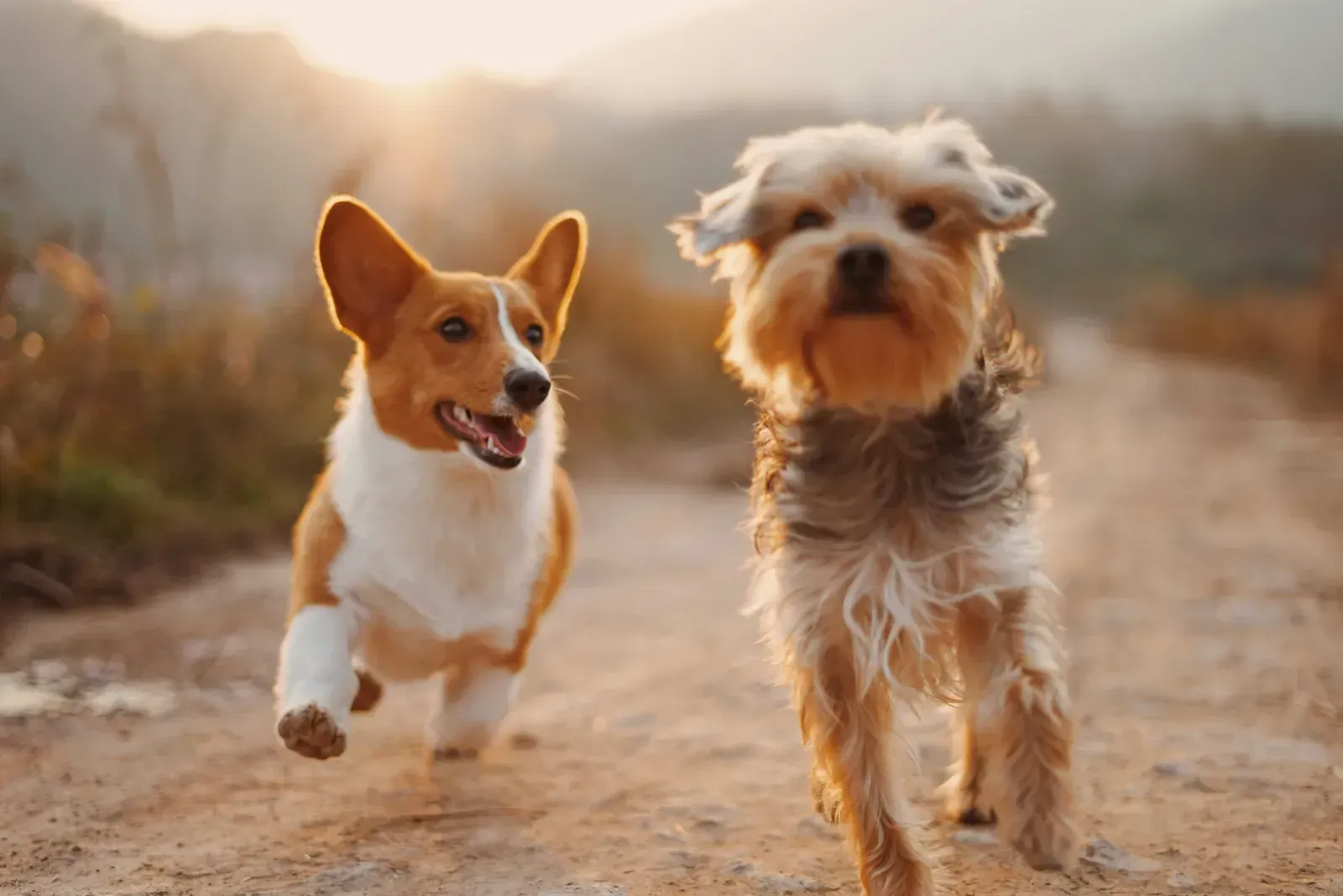
Talking about small dog breeds does not mean talking about simple or easy dogs by default. Their size can make many people see them as more manageable, but behind that idea there are often important differences in energy, sensitivity, tolerance to the environment, and overall style of coexistence. That is why it helps to look beyond the image of the small dog as an automatic synonym for convenience.
A useful piece for beginners should not stop at a list of names. It also needs to explain what usually changes when a dog belongs to a smaller group and why two breeds of similar size may fit very differently into the same home.
What usually defines a small dog
There is no single exact and universal border that determines when a dog belongs to the small category, because classifications vary depending on the source and the criterion used. Even so, people usually talk about small dogs when adult weight and body structure stay clearly below the general average. For a beginner, the useful point is not memorizing one number, but understanding how that size affects daily life.
A small dog usually takes up less space, is easier to transport, and has a smaller physical impact inside the home. Even so, that does not mean it needs less attention or less structure. Many people discover too late that a small dog can also be intense, sensitive to noise, highly active, or demanding in the way it relates to its surroundings.
Size alone does not explain temperament. Some small breeds are very sociable, others more watchful, others full of energy, and others more moderate in pace. That is why basing the entire expectation on size usually gives an incomplete picture of real-life coexistence.
Well-known small dog breeds
The Chihuahua is often one of the first references when small dogs come up. Its size makes many people associate it with easy handling, but its presence often comes with a very marked personality. In many cases, it is not so much a discreet dog as a small dog with a strong response to the environment.
The Pomeranian also appears frequently among the best-known small breeds. Its striking appearance often makes people see it as a purely companion dog, although that image leaves out the fact that it can be active, alert, and quite expressive. Its size does not remove the need for education and routine.
The Yorkshire Terrier is another very recognizable breed in this group. It is often linked with an elegant or urban image, but that does not summarize the full profile well. Many people discover that small size can coexist with an alert character and an energy level that does not always match overly passive expectations.
The Shih Tzu often projects a calmer image and a sense of close companionship. Even so, as with other small breeds, daily life does not depend only on appearance. The environment, routine, type of handling, and the caregiver's ability to understand what the dog needs beyond size all matter.
The Miniature Dachshund also tends to be part of conversations about well-known small dogs. Its silhouette makes it very recognizable, but the reason to include it here is not only visual. It helps illustrate that, within the small-dog group, there are still very different profiles in energy, initiative, and the way they interact with the environment.
Common differences in energy, character, and coexistence
Even though these breeds share a reduced size, they do not all create the same kind of coexistence. Some may adapt better to quieter homes, others tend to respond more strongly to movement and noise, and others require more attention to how stimuli and routine are managed. Assuming that all small dogs work the same way would not be very useful.
The sense of daily effort also changes. In some cases, the demand may be felt more through activity and constant need for interaction. In others, the sensitive point may be environmental sensitivity, a tendency to react quickly, or the ease with which they develop difficult habits when structure is unclear.
That is why, when someone starts learning about small dogs, it is often more useful to compare styles of coexistence than to stay with a list of famous breeds. Questions such as how much the dog tends to move, how it responds to novelty, or how much room a beginner has to guide it well often give a more useful picture than appearance alone.
What a beginner should keep in mind
For a beginner, the first filter should not be which breed seems more convenient because of size, but which type of coexistence can realistically be sustained. A small dog can fit well in many contexts, but that does not mean it works without clear criteria. Routine, education, and behavior reading still matter.
It also helps to avoid a very common idea: thinking that because the dog is small, any mismatch will be minor or easier to fix. Sometimes the opposite happens. Since the physical impact looks smaller, some signals are tolerated for too long or corrected too late. That permissiveness can complicate daily life more than expected.
In that sense, practical compatibility is usually the most useful criterion. Before focusing on one specific breed, it helps to think about real time, tolerance for noise or movement, expectations around contact, previous experience, and the ability to maintain a coherent routine. That approach usually prevents decisions based only on looks or fame.
FAQ
What is considered a small dog?
A dog is usually described as small when its adult size stays clearly below average in both build and weight, although the exact limit may vary depending on the classification being used. In practice, it is usually more useful to think about how that size affects day-to-day coexistence than to rely on one rigid figure.
That effect appears in things like the amount of space the dog occupies, ease of transport, and physical impact inside the home. Even so, those logistical advantages do not fully explain temperament or the real complexity of coexistence, which depend on many other factors.
Are all small dog breeds good for beginners?
It is better not to assume that. A dog being small or very popular does not automatically mean it fits well with every first-time caregiver. Size may simplify some things, but it does not remove important differences in energy, sensitivity, reactivity, or need for structure.
That is why the useful question is usually not whether a breed is simply "easy" or "difficult", but what conditions it needs and whether the caregiver can sustain them consistently. The same breed may feel manageable in one context and more complex in another.
Does a small dog need less training because it is easier to manage physically?
No. A dog being easier to hold or transport does not mean it needs less educational support. In fact, small dogs sometimes receive fewer clear limits precisely because their size makes certain behaviors look less problematic at first.
When that happens, less desirable habits can become established and make everyday coexistence harder. That is why easier physical handling should not be confused with a lower need for guidance, routine, or behavior reading.
Why is it useful to look beyond a breed's appearance or fame?
Because the public image of many small breeds often simplifies reality a lot. Some are associated with constant companionship, others with aesthetics, and others with urban life, but those labels do not fully explain what daily coexistence will look like in one specific home.
Looking beyond fame helps focus on more useful questions: activity level, environmental sensitivity, style of bond, and the real margin a beginner will have to support the dog well. That shift in perspective often helps avoid unrealistic expectations.