
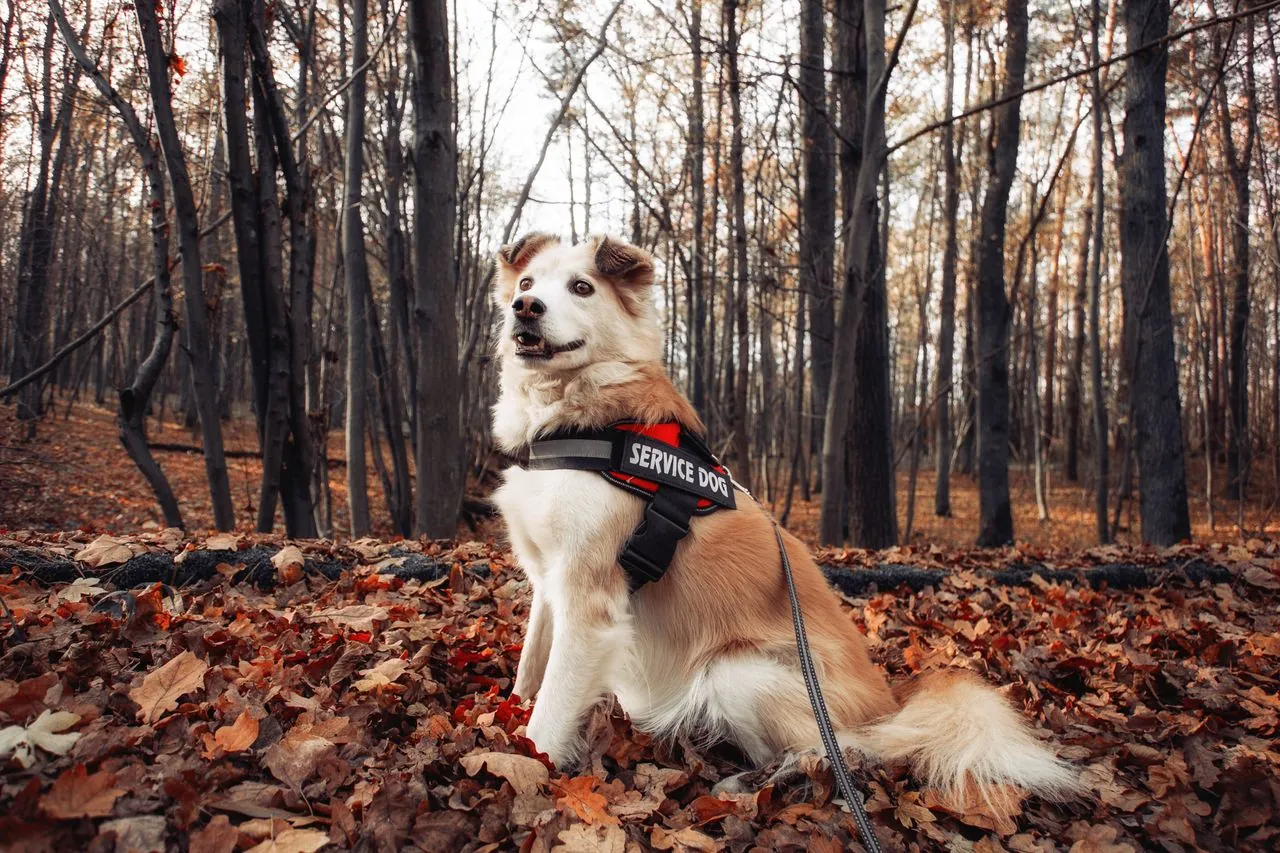
Talking about assistance dogs does not simply mean talking about very well-behaved dogs or dogs with a calm temperament. These are animals prepared to perform specific functions that support a person's autonomy and safety in certain situations. That help may be related to mobility, orientation, detection of specific physical changes, or the execution of practical tasks in everyday life. Because of that, understanding what an assistance dog is requires looking beyond the broad idea of a companion dog or an obedient dog.
For a caregiver, this topic also requires precision. Not every dog that comforts, accompanies, or helps someone feel better belongs to the same category. Living with an assistance dog also involves respecting routines, rest needs, ongoing training, and a working role that does not disappear simply because the dog is at home. Understanding these differences helps avoid confused expectations and makes it easier to appreciate what this kind of dog actually contributes.
What people mean by an assistance dog
In general terms, an assistance dog is a dog trained to help a person with a disability or with a specific functional need through practical and observable tasks. The key point is not only companionship, but useful intervention in daily life. Depending on the case, the dog may guide, alert, retrieve objects, activate mechanisms, create space, warn of changes, or support movement and routine activities.
That means the dog's main value is not symbolic or decorative. Its presence is tied to specific actions that improve safety, autonomy, or day-to-day participation for the person it assists. In that sense, it helps to understand that an assistance dog works within a functional relationship, even though there is also an obvious emotional bond between dog and handler.
It is also important to remember that terminology and legal recognition may vary from one country or local system to another. For that reason, when discussing assistance dogs, it is often most useful to begin with the core idea: a dog trained to support concrete tasks linked to a real need, rather than relying on broad or loosely applied labels.
What kinds of support they can provide
Not all assistance dogs do the same work. Many people immediately think of a guide dog, but that is only one possible profile. Some dogs are trained to assist with mobility, some alert to certain sound cues, some detect specific physiological changes, and others perform practical help sequences both at home and in public settings.
The useful point is not memorizing a closed list, but understanding that the dog's work is defined by the task it learns and by the actual usefulness of that task. A dog may help retrieve a dropped object, indicate an alarm, interrupt a risky situation, or support a safer movement routine. In every case, the role is linked to a practical need and not only to general emotional companionship.
That diversity explains why two assistance dogs may look quite different in the way they work. One may operate through frequent movement, another through stillness and observation, and another through very specific responses to defined signals. The difference does not imply more or less value. It simply reflects adaptation to different functions.
How they differ from other support dogs
One of the most common points of confusion appears when people compare assistance dogs with therapy dogs or emotional support animals. Although all of them may have a positive effect on well-being, they do not necessarily serve the same function or respond to the same kind of training. An assistance dog is defined by specific tasks aimed at the autonomy or safety of a particular person.
A therapy dog, by contrast, usually works within structured activities led by professionals and focused on accompaniment or intervention in organized settings. An emotional support animal may have an important place in someone's life, but it is not always trained to perform observable functional tasks in the same way as an assistance dog.
Making these distinctions is not about creating an emotional hierarchy between one role and another. It is about avoiding confusion around expectations, routines, rights, and work demands. From a caregiver perspective, this difference matters because it explains why an assistance dog needs certain management habits and why it should not always be treated exactly like any pet dog.
Training, routine, and expected behavior
Behind the visible work of an assistance dog there is usually a long process of socialization, learning, and maintenance. It is not enough for the dog to be friendly or willing. The dog needs to learn to respond steadily in different contexts, ignore distractions when necessary, and perform tasks with enough consistency for the help to be reliable.
That also shapes everyday routine. Rest, health, exercise, nutrition, and environmental predictability still matter. An assistance dog is still a dog with basic needs. In fact, part of the success of the partnership depends on those needs being properly met and on daily handling not wearing down the dog's physical or behavioral well-being.
From the outside, many people expect flawless behavior at all times, as if training removed every biological or emotional limit. That idea is not realistic. Even a highly prepared dog still needs pauses, suitable context, and careful environmental management. Caring well for an assistance dog therefore means combining the working function with protection of its daily balance.
What living with one involves at home and in public
Living with an assistance dog means recognizing that home is not automatically a place where the dog's functional role disappears completely. Even with clear moments of rest and ordinary domestic life, the routine needs to preserve useful skills and allow the dog to respond when the situation requires it. That influences schedules, handling, forms of interaction, and respect for certain work dynamics.
It also means educating the human environment. Relatives, visitors, and strangers often feel curious, want to call the dog, or try to interact without considering whether it is working. Those interruptions can interfere with a task or break concentration at an important moment. Part of responsible coexistence is setting clear limits and remembering that the dog is not always available for social interaction.
In public spaces, the situation may require even more clarity. The caregiver or the surrounding environment needs to understand that the dog's presence is not ornamental. Its work may be quiet, discreet, or hard to detect from the outside, but still be decisive. Seeing the dog only as an especially calm animal can lead people to underestimate the kind of support it is providing at that moment.
What a caregiver should keep in mind
For a caregiver, one of the most useful ideas is not to separate function from welfare. An assistance dog may provide highly relevant help while also needing rest, play, veterinary follow-up, behavior monitoring, and a predictable environment. Caring well does not only mean preserving the dog's working ability. It also means sustaining the conditions that allow that work to remain compatible with good quality of life.
It also helps to avoid two extremes. One is treating the dog only as a tool and forgetting that it is a living being with its own needs. The other is treating it only as a pet without taking its training and specific function seriously. Everyday coexistence usually works better when both dimensions are understood at the same time.
From that perspective, daily observation becomes essential. Changes in appetite, rest, motivation, tolerance for the environment, or response to usual tasks may indicate that something needs adjustment. The caregiver's role adds value precisely there: sustaining routine, protecting the dog's welfare, and understanding that its help also depends on how it is supported every day.
FAQ
Do all assistance dogs perform the same tasks?
No. The work of an assistance dog depends on the specific need of the person it helps and on the type of training it has received. For that reason, some dogs guide, some alert, some retrieve objects, and some carry out more specific help sequences at home or during everyday movement.
The important point is not to judge the function only by what is easy to see from the outside. Some tasks are very discreet and may look minor to an observer, yet they can have a real impact on safety, orientation, or autonomy. Two dogs may appear very different in the way they work and still be performing equally relevant roles.
How is an assistance dog different from a therapy dog?
The main difference lies in the kind of function and the context of intervention. An assistance dog performs concrete tasks oriented to one specific person and one specific functional need. Its role is tied to everyday life and to practical support that should be observable and consistent.
A therapy dog, by contrast, usually participates in structured activities designed for accompaniment or support within professionally guided settings. Both may contribute to well-being, but they do not belong to the same work framework or imply the same expectations in day-to-day coexistence.
Can it play and rest like any other dog?
Yes. Having an assistance role does not remove a dog's need for rest, play, exploration, and general care. In fact, part of the dog's stability depends on maintaining a sufficiently balanced daily life and not being reduced only to its working function.
The difference lies in how that routine is organized. Moments of play or rest need to coexist with a structure that protects learned skills and response reliability. The goal is not for the dog to work all the time, but for the environment to respect when it is available and when it needs a pause.
What should the surrounding environment avoid when the dog is working?
It helps to avoid calling the dog, petting it, offering unplanned treats, or trying to capture its attention without considering the context. From the outside, it may not always be obvious that the dog is performing a task or maintaining important vigilance, but interrupting it can interfere with the very function it is supporting at that moment.
It is also usually unhelpful to turn the dog into a constant object of curiosity. Asking respectfully may be reasonable in some contexts, but invading space, distracting the dog, or assuming it is always available for interaction is not. Good social coexistence begins by recognizing that the dog's presence serves a real function and is not there for display.