
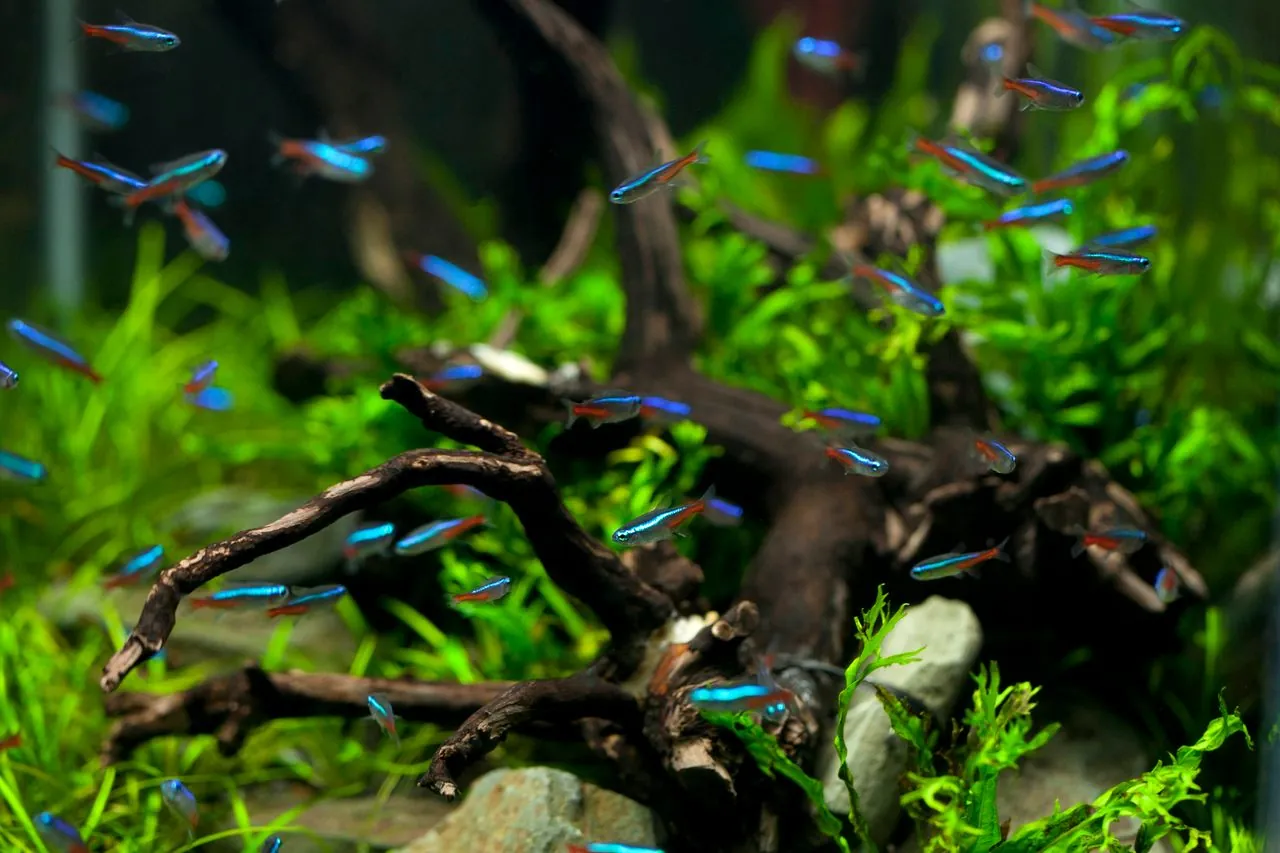
Caring for aquarium fish comes down to a few principles: stable water, moderate feeding, and constant observation. When these elements are in place, most common problems are prevented before they appear. This guide gathers the basic guidelines for anyone starting with a first aquarium.
Prepare the aquarium before adding fish
A common beginner mistake is introducing fish on the same day the tank is set up. An aquarium needs time to stabilize. The filter must run for several weeks before the water is safe, because during that period the colony of bacteria that turns fish waste into less toxic compounds takes shape. This process is known as the nitrogen cycle.
During the preparation stage, fill the tank with conditioned water, meaning tap water treated to remove chlorine. Plug in the filter and heater, check the temperature, and wait three to four weeks before buying the first fish. This noticeably reduces early problems.
Keep the water quality high
Water is the fish's entire environment: it is its air, its food, and its shelter. Keeping it clean and stable matters more than any tank decoration. A test kit allows you to periodically measure ammonia, nitrites, and nitrates, the three basic indicators of aquarium health.
The most useful routine is the partial water change: replacing about 20 to 25 percent of the volume once a week, using conditioned water at a similar temperature. Unlike full cleanouts, partial changes preserve the beneficial bacteria. It is also wise to avoid sudden temperature shifts, because rapid changes stress the fish.
Feed with moderation
Overfeeding is one of the most common causes of dirty water and sick fish. In most cases, one or two small feedings per day are enough. The right portion is the one the fish finish within one or two minutes; leftovers decompose on the bottom and degrade water quality.
It is a good idea to alternate the main food with an occasional supplement, such as frozen or vegetable food, depending on the species. A simple practice is to net out visible leftovers a few minutes after each feeding.
Choose compatible species and respect the space
Not all fish get along or need the same amount of room. Before buying, it is recommended to learn about each species' adult size and temperament. A small, peaceful fish can end up as prey for a larger or territorial tankmate.
Also, a tank with too many fish gets dirty faster, and the filter cannot always keep up. As a general reference, it is better to start with few species and add fish gradually, leaving time between each addition to confirm the water stays stable.
Set up a maintenance routine
Aquarium maintenance is simpler when it becomes a weekly habit. A basic routine can include:
- Checking the temperature and the filter's operation.
- Performing the partial water change with a siphon to clean the bottom.
- Removing excess algae from the glass with a scraper.
- Rinsing the filter material in tank water, never in tap water.
That last point matters: tap water destroys the beneficial bacteria living in the filter. That is why the filter media is rinsed in a bucket of water drawn from the aquarium during the weekly change.
Watch the fish's behavior
Fish show clear signals when something is wrong. Struggling near the surface, keeping the fins pressed against the body, developing spots on the skin, losing appetite, or hiding constantly usually point to a problem with the water or the animal's health.
When any of these signs appear, the first step is to measure the water parameters. In most cases, a partial water change resolves the episode if it is caught in time. If symptoms persist after correcting the water, it is worth consulting a professional with fish experience.
Frequently asked questions
How often should aquarium water be changed?
A weekly partial change of 20 to 25 percent of the total volume is the usual practice. This frequency keeps nitrates low without disturbing the tank's biological balance. In small or heavily stocked aquariums, water changes twice a week may be necessary.
What matters is regularity, not volume. A large, infrequent change stresses fish more than a small repeated one, because it suddenly alters the water chemistry they have already adapted to.
Why does the water turn cloudy or green?
Cloudy water usually indicates food debris, dirt on the bottom, or a filter that has not fully stabilized. A green color, on the other hand, corresponds to algae growth caused almost always by too much direct light or an excess of nutrients in the water.
Both situations are corrected by reducing light hours, spacing out feedings, and keeping up the partial water changes. If the problem continues for several weeks, it is worth reviewing the number of fish and the filter's performance.
How long does it take for an aquarium to be ready for fish?
A newly set up aquarium usually needs three to four weeks to complete the nitrogen cycle and provide safe water. The process can be shortened by using biological material borrowed from an established aquarium, although it always requires patience.
The best way to know if the aquarium is ready is to measure: when ammonia and nitrites read zero and nitrates stay low, the tank is suitable for its first fish.
Conclusion
Caring for aquarium fish is, above all, a matter of consistency: preparing the tank before buying, maintaining water quality with regular partial changes, feeding with moderation, and watching the fish daily. With a simple, steady routine, a home aquarium can stay healthy with little weekly time.