
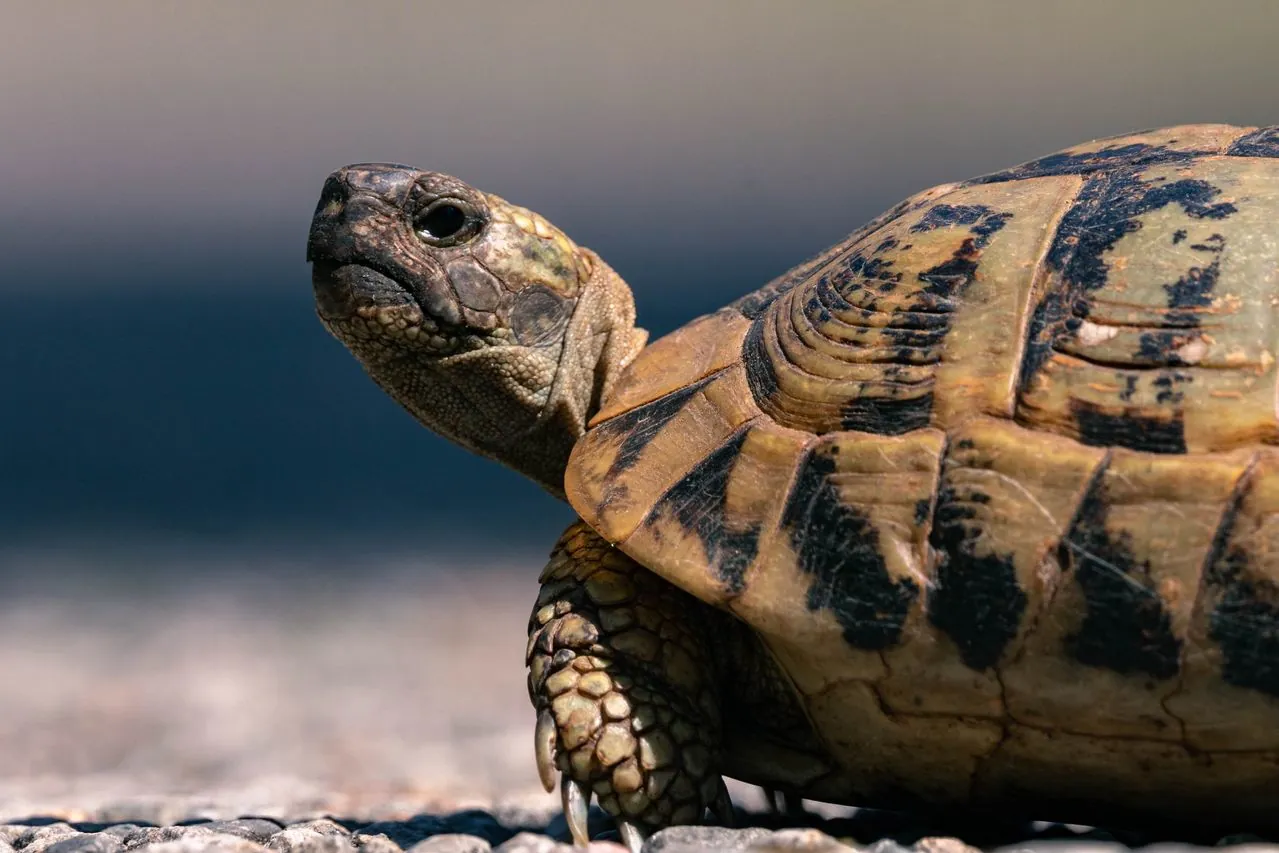
A tortoise can live for many years, and its needs depend largely on the environment it is given. Unlike many other pets, food and a container are not enough: a tortoise needs room to walk, suitable lighting, areas with different temperatures, shelter, and a high-fiber diet.
This guide summarizes the basics for beginner caregivers. It does not replace species-specific information or a check-up with a veterinarian experienced with reptiles, but it helps set priorities before and after the tortoise arrives home.
Identify the species before planning its care
The word tortoise covers species with different needs. Some come from Mediterranean climates and others from tropical or arid regions, so temperature, humidity, diet, and even whether they should hibernate can vary. The first step is to know for certain which species it is.
It is also worth checking where the tortoise comes from and which documents are required. Some tortoises are protected species and keeping them may be regulated, so it is advisable to look up local rules and never take animals from the wild. An initial veterinary visit helps confirm the species, assess its condition, and answer questions about handling.
A suitable space: enclosure, substrate, and shelter
Tortoises need to move, explore, and dig. A small enclosure or plastic box limits activity and makes it hard to create areas with different conditions. When the climate and setting allow it, a secure outdoor enclosure usually offers more space and natural light; indoors, a large, well-ventilated enclosure is needed.
The enclosure must prevent escapes and protect the tortoise from other animals. Many tortoises dig or climb at corners, so edges, fences, and gaps should be checked. A substrate suited to the species, which allows digging without being dusty or encouraging accidental ingestion, plus one or more hides, completes the basic setup.
It is also important to avoid slippery surfaces, objects with sharp edges, and plants that are toxic or treated with chemicals. A space with varied features, such as gentle slopes, stable stones, or safe plants, encourages more natural activity.
Light, heat, and temperature
Like other reptiles, a tortoise relies on its surroundings to regulate body temperature. It needs a warmer area to bask and a cooler area to retreat to. This gradient lets it choose where to stay according to its needs throughout the day.
Light also plays an important role. Indoors, a UVB light source designed for reptiles is usually necessary because it is involved in calcium use. Window glass filters out much of that radiation, so placing the enclosure next to a window does not replace proper lighting. Lamps should be installed safely, following the distance and replacement schedule recommended by the manufacturer.
Specific temperatures and light schedules depend on the species. A thermometer in each area shows the real conditions instead of relying on guesswork. If the tortoise spends almost all its time under the heat lamp or hidden in the cool area, the setup may need adjusting.
Diet and hydration
The diet of many tortoises is based on high-fiber weeds and leaves. Food should be varied and suited to the species, because not all tortoises tolerate the same foods. Before offering something new, it is best to confirm that it is safe.
General guidelines that are commonly recommended include:
- Offer safe wild plants and a variety of leafy greens as the base of the diet.
- Limit fruit for species that do not usually eat it in the wild.
- Avoid processed foods, bread, dairy products, or dog and cat food.
- Ask a veterinarian whether a calcium supplement or other addition is needed.
Fresh water should be available in a shallow, stable, easy-to-clean dish that the tortoise can step in and out of easily. Some caregivers offer occasional lukewarm soaks in a container with a small amount of water, always under supervision, but the right frequency depends on the species, age, and environment.
Handling, hygiene, and daily routine
Tortoises do not usually seek to be picked up. Frequent handling can cause stress, and a fall can injure the shell. When a tortoise needs to be moved, hold it with both hands, close to the ground, and avoid turning it over suddenly.
Reptiles can carry bacteria such as Salmonella without showing symptoms, so it is important to wash hands after touching the tortoise, its enclosure, or its dishes. Children should be supervised, and accessories should not be cleaned in areas where food is prepared.
A simple routine includes removing leftover food and droppings, refreshing the water, checking that the lighting works, and observing activity, appetite, and appearance. Writing down changes helps catch problems before they become obvious.
Hibernation and warning signs
Some temperate species slow down and hibernate during the colder months, while others should not. Hibernation should never be improvised: it requires knowing the species and first confirming that the tortoise is healthy and in good condition. When in doubt, consult a veterinarian experienced with reptiles.
Seek professional advice if you notice prolonged appetite loss outside the hibernation period, lethargy, swollen or closed eyes, discharge from the nose or mouth, noisy or open-mouth breathing, a soft or damaged shell, persistent diarrhea, or weight loss. Tortoises may show few signs of discomfort, so it is not advisable to wait for them to get worse.
FAQ about tortoise care
Can a tortoise live indoors?
It can live indoors if it has a large enclosure, UVB lighting, a basking area, hides, and suitable substrate. Letting it roam freely on the floor does not usually meet its needs: it may get cold, be bumped, become trapped, or swallow objects.
When the climate and species allow it, many tortoises benefit from spending time in a secure outdoor enclosure with direct sun, shade, and shelter. In any case, the space should be planned around the needs of the species rather than household convenience alone.
What does a tortoise eat?
Most common tortoise species mainly eat high-fiber weeds and leaves. Variety matters, as does avoiding processed products and not basing the diet on a single food.
Needs vary by species, so the safest approach is to confirm which foods are appropriate for the specific tortoise. A veterinarian experienced with reptiles can also advise whether calcium supplementation is needed.
Do all tortoises hibernate?
No. Some temperate species hibernate naturally, while tropical species should not. That is why identifying the species is essential before changing temperature, lighting, or diet in autumn.
Even in species that hibernate, the process requires preparation and a healthy tortoise. A veterinary check beforehand helps decide whether it is appropriate and how to manage it safely.
The information provided is for educational purposes and does not replace assessment by a veterinarian experienced with reptiles.