
Talking about large dog breeds is not only about thinking in terms of size. Behind that label there are usually differences in strength, growth rhythm, handling needs, and day-to-day expectations that a beginner may not fully anticipate. That is why it helps to understand what large dogs often have in common and where they can differ quite a lot before focusing only on appearance or popularity.
This kind of article works best when it combines curiosity with practical context. Knowing familiar large breeds is useful, but it also matters to understand that two dogs of similar size may differ significantly in energy, ease of handling, and the way they fit into home life.
What usually defines a large dog
There is no single universal boundary that determines when a dog counts as large, because categories may vary depending on the source. Even so, the term is usually applied in practice to dogs that reach a clearly above-average body size and weight. For a beginner, the useful point is not memorizing one exact number, but understanding that size affects everyday life.
A large dog usually takes up more physical space, has more strength when moving, and needs steadier handling from an early stage. It may also require more planning for transport, resting areas, accessories, and management inside the home. That does not mean every large dog is difficult, but it does mean that practical logistics matter more than they often do with smaller dogs.
Size alone does not explain temperament, either. Some large breeds are known for sociability and stability, others for reserve, others for high energy, and others for a calmer pace. That is why thinking only in terms of big versus small rarely gives a realistic picture of what living with the dog will actually feel like.
Well-known large dog breeds
The Labrador Retriever is one of the best-known large breeds. Many people associate it with a sociable and adaptable character, but that image should not hide the fact that it is still a sturdy, active dog that usually benefits from clear routines. A friendly reputation does not replace daily work around guidance and handling.
The Golden Retriever is another familiar reference when people talk about large family dogs. It is often perceived as approachable for home life, yet it remains a large breed with energy, activity needs, and a body that requires space and control, especially during youth.
Another very well-known example is the German Shepherd. It is often linked with intelligence, environmental awareness, and working ability. For that same reason, many people realize too late that admiring its presence or popularity is not enough. It typically benefits from structure, direction, and a form of coexistence that goes beyond initial enthusiasm.
The Rottweiler also appears frequently in conversations about large dogs. Its physical presence is very marked, and it tends to trigger strong opinions that are sometimes oversimplified. As with other breeds, behavior cannot be summarized usefully with quick labels alone. Context, education, and responsible handling matter a great deal.
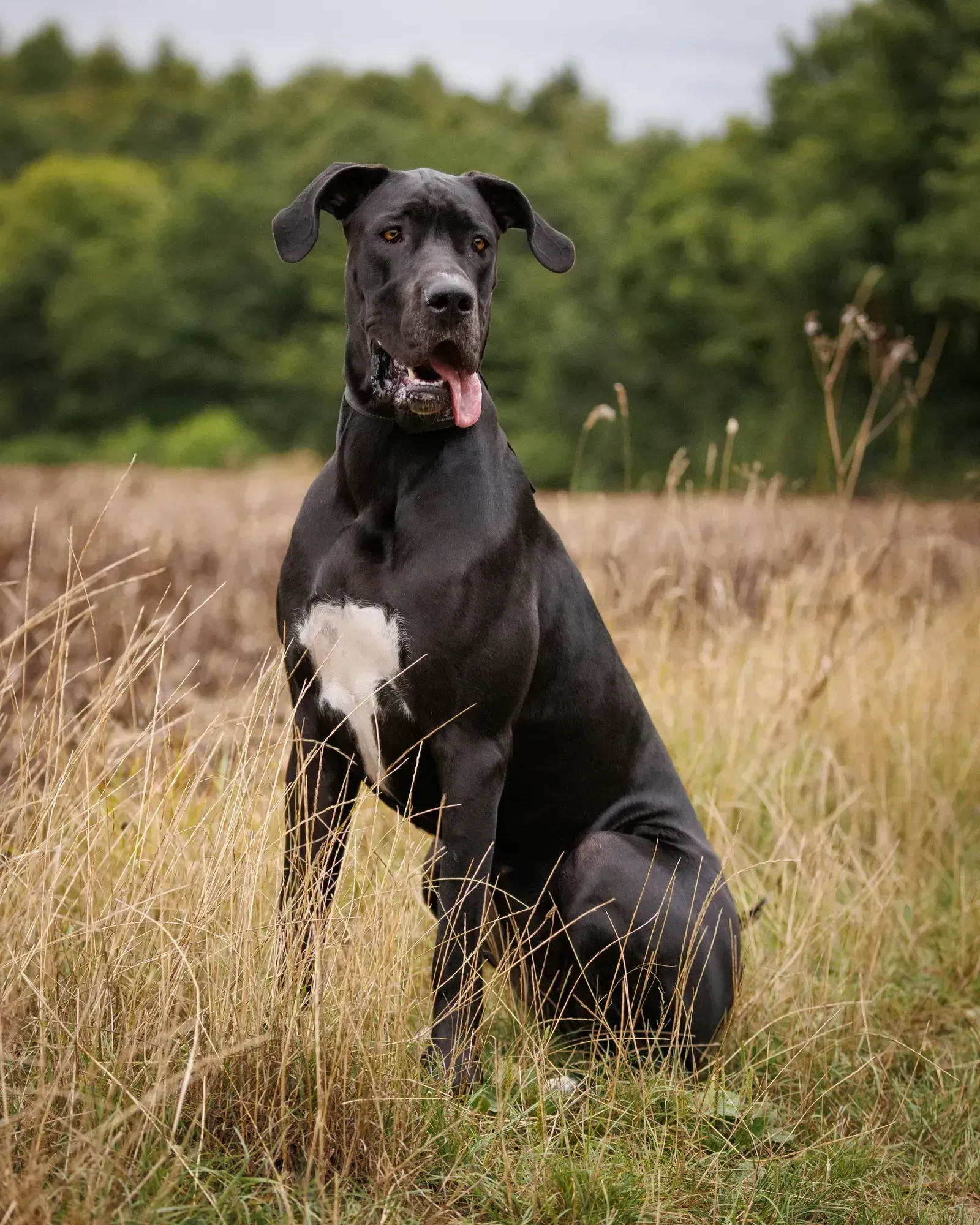
At the most striking end of size, the Great Dane often represents the image of the giant or very large dog. Its example is useful because it shows that visual impact and everyday coexistence are not the same thing. A very large dog may appear calm, yet still require real planning in terms of space, movement, and basic handling.
Common differences in energy, temperament, and coexistence
Even though these breeds fall under the broad category of large dogs, they do not all create the same kind of home life. Some tend to fit better into highly active family routines, while others call for more attention to environmental stability, stimulus management, or the kind of bond they build with people. Assuming that all large dogs behave in the same way would not be very useful.
The daily effort can also feel different depending on the breed. In some cases, the challenge may be more visible in physical activity and movement needs. In others, the sensitive point may be environmental management, socialization, or the caregiver's ability to maintain clear rules with a physically powerful dog. Size amplifies the impact of these differences.
That is why, when someone starts learning about large dogs, it is often more useful to compare styles of coexistence than to stay with a list of names. Questions such as how much the dog usually moves, how it tends to respond to its surroundings, how much handling margin a novice has, or how strongly size shapes daily life often give a more useful picture than breed fame alone.
What a beginner should keep in mind
For a beginner, the first question should not be which breed looks the most impressive or the most beautiful, but which kind of coexistence can realistically be sustained over time. A large dog can fit well into an organized home and a coherent routine, but it usually leaves less room for improvisation. Strength, space, and daily management become noticeable sooner.
It also helps to think in stages rather than only in terms of the idealized adult dog. Many large dogs go through an intense youth in which they are still learning how to manage their bodies, energy, and impulses. If the handling foundation is weak, that period can feel much more demanding than a beginner expected after looking only at photos or general descriptions.
In that sense, practical compatibility is usually the best starting filter. Before focusing on one specific breed, it helps to think about available time, real experience, space, tolerance for movement, and the ability to sustain education and routine. That filter keeps the choice from depending only on breed image and brings it closer to a workable day-to-day reality.
FAQ
What is considered a large dog?
A dog is usually considered large when, in adulthood, it clearly exceeds average size in both build and weight, although the exact limit can vary depending on the classification being used. In practice, it is often more useful to think about how that size affects daily life than to focus on one isolated number.
That effect appears in concrete areas such as strength while moving, resting space, handling during walks, transport, and the need for steady education. For a beginner, that practical reading is usually more helpful than trying to memorize an exact border between medium, large, and giant.
Are all large dog breeds suitable for beginners?
It is better not to assume that. A breed being famous or popular does not automatically mean it will fit well with any first-time caregiver. Size already adds a layer of handling demand, and on top of that there are differences in energy, environmental sensitivity, learning pace, and need for structure.
That is why the useful question is usually not whether a breed is simply "good" or "bad" for beginners, but what conditions it needs and whether the caregiver can sustain them consistently. The same breed may feel manageable in one setting and much more difficult in another.
Is a calm large dog better than a very active one?
Not necessarily, because coexistence does not depend only on how much energy the dog has, but on how its needs fit into the real routine of the home. A dog that seems calm may still be difficult to handle if the environment lacks stability or if there are no clear educational criteria.
In the same way, a more active dog is not always a problem if the caregiver can organize movement, structure, and rest well. Rather than looking for a simple label, it helps to understand what kind of daily effort each profile requires and whether that effort is sustainable over time.
Why is it useful to look beyond a breed's appearance or fame?
Because the public image of a breed usually simplifies reality a lot. Some breeds are associated with families, others with work, and others with an imposing presence, but those labels do not explain on their own what daily coexistence will look like in one specific home.
Looking beyond fame helps focus on more useful questions: real handling, activity level, need for structure, and how much room a beginner will have to support the dog well. That shift in perspective often prevents unrealistic expectations.