
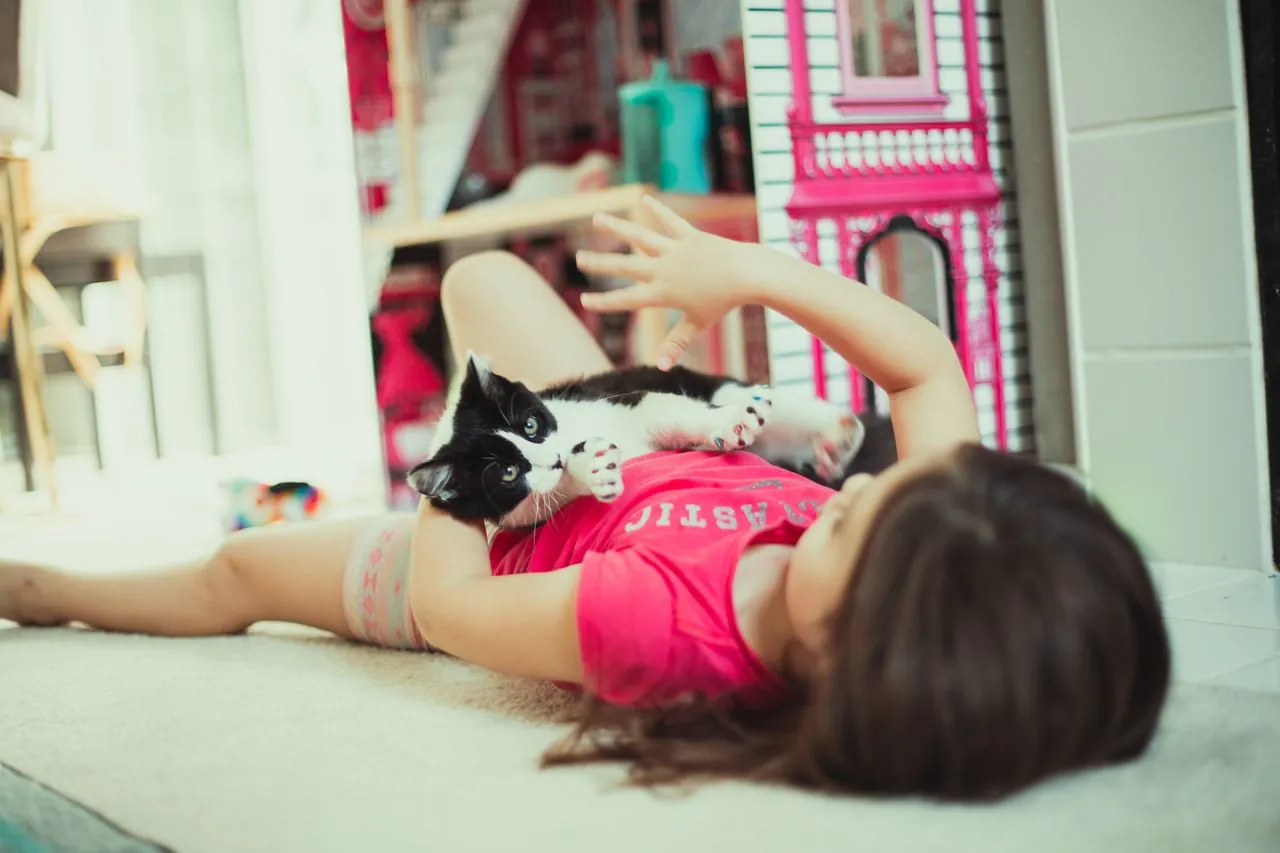
Life with pets and children is one of the most common situations in households with animals, and also one of the most rewarding when it is organized well. Growing up with a dog, a cat, or another companion animal offers more than company: it shapes how children learn to observe, wait, care for others, and interpret signals that are not verbal.
Those benefits, however, do not appear automatically. They depend on adult supervision, choosing a suitable animal, respecting its needs, and building clear routines for the whole family. This guide gathers practical criteria to make the relationship between children and pets safe, stable, and positive for both sides.
Emotional benefits of growing up with a pet
Many children build a strong affective bond with household animals. That relationship can become a source of everyday emotional support, especially during transitions such as moving home, starting school, or the arrival of a sibling.
Frequently observed effects include:
- A sense of stable, predictable companionship.
- Calm moments and non-competitive play.
- Improved self-esteem through small caregiving tasks.
- Greater ease in expressing feelings out loud.
The emotional benefit increases when the child sees the animal as a companion who deserves respect, not as a toy available at any moment.
Building empathy and responsibility
Caring for another living being requires stepping outside one's own perspective. A child who learns to recognize when a pet is hungry, tired, or wants to be alone is training empathy skills that later transfer to human relationships.
Responsibility develops better through gradual, age-appropriate tasks:
- Preschool: accompany the adult and observe basic routines.
- Early primary: refill water, help prepare meals.
- Later primary: brushing, tidying toys, joining supervised walks.
- Preteen years: help with schedules, hygiene, and routine tracking.
The key point is that final responsibility stays with the adult. Delegating full care to a child usually leads to welfare gaps and family frustration.
Effects on habits, activity, and routine
Households with pets often develop clearer routines: feeding times, outings, play, and rest. That structure also benefits children, because it makes the link between action and consequence visible.
With dogs, walks provide regular physical activity and chances to practice street safety rules. With cats and small mammals, the benefit leans more toward observation, consistency, and respect for the animal's pace.
Non-verbal communication: learning to read the animal
One of the most valuable lessons is understanding that animals communicate constantly without words. Teaching children to interpret basic signals reduces accidents and improves daily life.
Signals worth explaining in simple terms:
- Tense or stiff body posture.
- Attempts to move away or hide.
- Yawning, lip licking, or looking away.
- Ears back, low tail, or raised hair.
- Growling and hissing as early warnings, not random aggression.
A central message for the child is that if the animal moves away, it must be allowed to do so without being followed.
Safety rules for daily coexistence
Safety does not depend only on the animal's temperament, but on context and supervision. Most incidents happen in ordinary, predictable situations.
Recommended practical rules:
- Active adult supervision with young children.
- Never disturb the animal while eating, sleeping, or hiding.
- No riding, pulling ears, tail, or limbs.
- Teach gentle petting in areas the animal accepts.
- Provide a refuge space where the animal is never interrupted.
These rules should apply consistently, even with calm animals and years of shared life.
Choosing the right pet for a family with children
Compatibility depends not only on species or breed, but on individual temperament, the animal's age, and the family lifestyle. An animal that is highly noise-sensitive may struggle in a home with intense play, even if its breed has a sociable reputation.
Before adding a pet, it is worth assessing:
- Realistic time available for walks, hygiene, and attention.
- Home space and typical activity level.
- Budget for food and veterinary care.
- Children's ages and the level of supervision possible.
- The animal's history and behavior if adopted.
A well-planned decision helps prevent returns, abandonment, and household conflict.
Sharing tasks without overloading children
Shared tasks work better when they are specific, visible, and reviewed by an adult. A simple weekly chart helps each family member know their part and avoids repeated arguments.
Suggestions for organizing the split:
- Assign short, realistic tasks based on age.
- Review completion without turning it into punishment.
- Rotate responsibilities to prevent fatigue.
- Acknowledge effort with verbal reinforcement.
The goal is not to make the child work, but to encourage participation and consistency.
Hygiene, health, and prevention in homes with children
Safe coexistence includes basic hygiene measures that protect both the animal and the children. Prevention does not require extreme steps, only routine and consistency.
Common prevention points:
- Handwashing after playing with or handling the animal.
- An up-to-date veterinary schedule, including deworming.
- Regular cleaning of bowls, beds, and litter boxes.
- Avoiding unsuitable human food.
- Consulting a veterinarian about skin, coat, or behavior changes.
These routines also teach children that care includes health, not only affection.
Handling family changes and goodbyes
Life with animals includes difficult stages: illness, aging, and loss. Handled with honesty and age-appropriate language, these moments can help children understand natural processes.
It is better to avoid confusing explanations or metaphors that create fear. Clear information, space for questions, and respect for the child's emotional pace usually work better than withholding details.
FAQ
At what age can a child start caring for a pet?
A child can take part from a very early age, as long as the involvement is symbolic and supervised. In preschool years, realistic contribution is limited to accompanying an adult, observing routines, and learning respectful behavior toward the animal.
From school age onward, tasks can expand to concrete actions such as refilling water, helping with brushing, or joining walks with an adult present. Legal and practical responsibility for the animal's welfare must always remain with adults.
How can conflicts between a child and a pet be prevented?
Prevention relies on supervision, stable rules, and respect for the animal's signals. Most conflicts arise when the animal cannot retreat, when it is interrupted while eating or resting, or when play becomes too intense.
Creating refuge spaces, teaching when not to approach, and ending play before arousal escalates significantly reduces incidents. If signs of repeated tension appear, consulting an animal behavior professional is advisable.
Does having a pet really support child development?
Family experience and clinical observation suggest that living with animals can support empathy, routine, and gradual responsibility. The benefit depends less on the species and more on how the relationship is managed at home.
When care is well organized, the child learns to consider other beings' needs, maintain regular habits, and interpret non-verbal signals. When the animal is treated as unlimited entertainment, benefits shrink and risks increase for both sides.