
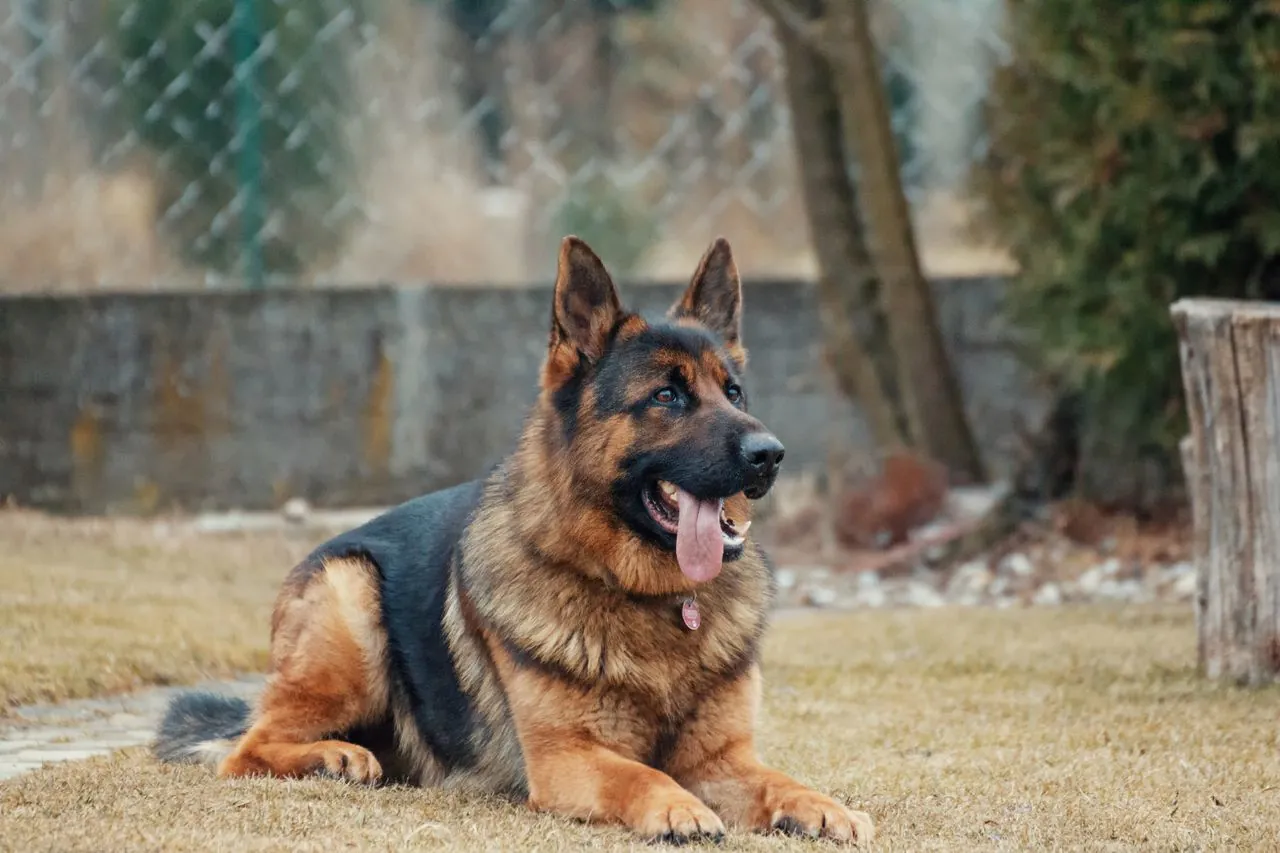
The German Shepherd is one of the best-known dog breeds in the world and also one of the breeds that tends to generate the strongest expectations. For many people, it represents intelligence, obedience, physical presence, and working ability. That image has some real basis, but it can also oversimplify what everyday life with this type of dog actually involves. A German Shepherd is not only a striking dog or a breed associated with working roles. It is usually a dog that needs activity, structure, consistent education, and an environment that can channel its energy and attention well.
For a beginner caregiver, the most useful thing is not to stay at the level of the breed's reputation, but to understand what it means in practice to share home, time, and responsibility with a dog of this profile. As with other popular breeds, real life depends on many variables: individual genetics, age, previous training, socialization, household structure, and human expectations. Understanding the general profile of the German Shepherd helps people make more realistic decisions and avoid overly simple ideas about what this dog can offer or require.
What usually defines the German Shepherd
The German Shepherd is often described as attentive, quick to learn, and strongly oriented to what is happening around it. That combination helps explain why the breed has historically been used in different types of work and why many people see it as especially intelligent. Still, practical intelligence does not mean everything becomes easy. A dog that observes closely, learns fast, and reacts strongly to the environment also needs clear guidance so that it does not develop responses that become hard to manage.
In general, this is a large, athletic dog with a notable physical presence. That affects daily life not only in terms of space, but also in strength, impulse, and need for movement. For a beginner, size and energy matter just as much as temperament. It is not enough to think of the dog as smart. It also matters what happens when that dog gets bored, becomes overstimulated, or does not clearly understand what is expected.
Temperament and bond with people
Many descriptions of the German Shepherd emphasize loyalty, attention to its group, and willingness to work together. In practice, this often translates into dogs that can become deeply attached to the people they live with and that pay close attention to their movements. That closeness can be an advantage for training, but it also creates responsibility. A dog that is this attentive does not always handle lack of routine, inconsistent rules, or abrupt changes in the relationship very well.
It also helps to remember that not all German Shepherds are alike or show the same level of confidence, sociability, or calm. Some individuals are steady and open to their environment; others are more reserved or more sensitive. That is why talking about breed temperament as if it were a uniform block can be misleading. For a beginner, the sensible approach is to start from broad tendencies while still understanding that each dog needs individual evaluation and management.
Physical activity and mental stimulation
One of the most important points in this breed is the need for activity. The German Shepherd usually does not fit well into a completely passive lifestyle. That does not mean the dog needs extreme exercise every day or that every household must turn daily life into an intense sport routine, but it does mean that structured outings, sufficient movement, and tasks that use attention, scent, and learning ability are often important.
For a beginner caregiver, the mental side matters as much as the physical one. A dog with this type of profile may become tired not only by running, but also by solving simple tasks, learning skills, doing scent work, or practicing self-control. When that need for purposeful occupation is not met, frustration, hypervigilance, vocalization, or difficulty relaxing at home become more likely.
Training and socialization from early stages
Early training usually makes a clear difference in a German Shepherd. A large dog that pays close attention to its surroundings needs to learn early how to handle leash work, self-control, visitors, urban stimuli, and new situations. Socialization does not mean exposing the dog to everything without filter. It means helping the dog build gradual and manageable experiences with people, dogs, sounds, surfaces, and different environments.
At the same time, basic training should focus on functional life skills: recall, walking with less tension, waiting, releasing objects, settling in a rest area, and tolerating routine handling. Consistency matters a great deal in this breed. If one day certain behaviors are allowed and the next they are corrected without a clear standard, the dog may become confused or more reactive to context. For beginners, a simple and repeatable structure usually works better than trying to teach too many things at once.
Daily life at home and compatibility with different households
The German Shepherd can adapt to different types of homes, but not under every circumstance and not with every lifestyle. The relevant question is not only whether the dog lives in an apartment or in a house with a yard, but how the day is organized. A home with clear routine, enough outings, proper rest, and realistic expectations usually offers better conditions than a large space with little useful interaction and inconsistent education.
It is also worth considering the household composition. In homes with children, older adults, or other animals, management should be especially careful during adaptation and learning. The dog's size and energy mean that good intentions alone are not enough. Supervision, clear rules, and gradual introductions usually matter more than trusting the breed to regulate itself automatically.
Grooming, basic health, and everyday maintenance
Although this is not a breed associated with extreme cosmetic upkeep, the German Shepherd does require regular care. Brushing helps manage shedding and makes it easier to observe the general state of the skin and coat. It is also useful to watch nails, ears, rest patterns, body condition, and overall comfort when moving. In large breeds, everyday observation habits often provide valuable information before a problem becomes obvious.
From a general perspective, a beginner does not need to memorize a complex medical list to live better with this breed, but it does matter to understand that veterinary follow-up, growth management in youth, weight control, and age-appropriate activity all belong to responsible care. Practical prevention is usually more valuable than reacting only when clear difficulty is already visible.
Common mistakes when choosing or living with a German Shepherd
One of the most common mistakes is choosing this breed only for its appearance, its reputation for intelligence, or the image of a protective dog. That decision can leave out basic realities such as available time, actual willingness to train, tolerance for daily movement, or the ability to provide a coherent routine. Another mistake is thinking that an intelligent dog trains itself. In reality, learning ability does not replace everyday work and does not correct lack of structure on its own.
It is also common to treat vigilance or environmental sensitivity as automatic virtues. In some contexts, those traits can become hard to manage if they are not paired with socialization, guidance, and enough rest. For beginners, the useful question is not whether the German Shepherd is a great breed in the abstract, but whether the household lifestyle fits what this type of dog often needs each day.
When it may be a good choice and when it is worth thinking twice
It may be a good choice for people who are genuinely willing to invest in training, routine, observation, and activity. It can also suit homes that value working together with the dog and are prepared to dedicate stable time to daily life with it. In those conditions, the German Shepherd can form a very solid relationship with its group and function well inside a clear structure.
By contrast, it may not be the easiest option if the goal is a low-demand dog, a dog largely independent of the environment, or a dog that can be improvised without much planning. It is also rarely ideal when there is no real room for exercise, learning, and consistent management. Thinking about that honestly before choosing can prevent a great deal of frustration for both the person and the dog.
FAQ
Is the German Shepherd suitable for a beginner caregiver?
It can be in some cases, but it is usually not the easiest place to start if there is no real willingness to learn about training, routine, and daily management. The combination of size, environmental awareness, and activity needs means expectations should be adjusted carefully from the beginning.
A beginner can live well with a German Shepherd if the focus is not on controlling the dog through force, but on organizing daily life with clarity and consistency. Without that foundation, the experience can become more demanding than it first appeared.
How much exercise does a German Shepherd need?
There is no single number that fits every individual, because age, health, and temperament can change movement needs quite a lot. Even so, this is usually a dog that needs more than brief, aimless walks. In most cases it makes sense to combine outings, functional activity, and mental tasks that help regulate energy and attention.
The useful question is not only how much the dog moves, but how the day ends. If the dog builds frustration, struggles to relax, or stays constantly activated, the routine probably is not covering its needs well.
What should I look at before choosing a German Shepherd?
The most important step is checking real compatibility with the household lifestyle: available time, interest in training, exercise management, the presence of other people or animals, and the ability to keep rules consistent. Choosing only for looks or reputation usually leads to unrealistic expectations.
It also helps to assume from the beginning that each individual may differ quite a lot from the stereotype of the breed. General tendencies are useful for orientation, but everyday life always depends on the specific dog and on how the relationship is built with it.