
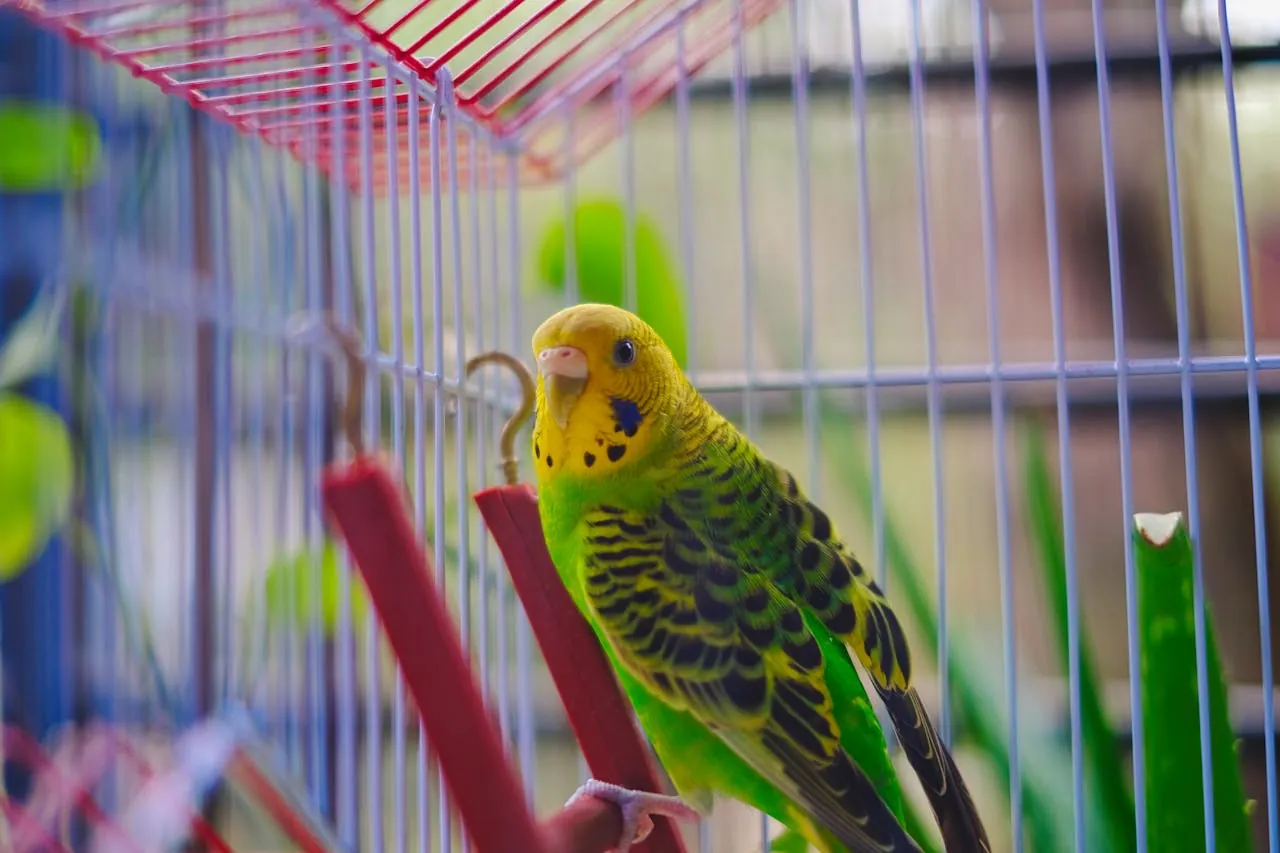
A budgie often stands out because of its size, constant activity, and the ease with which it visually fits into a home. That combination makes many people assume it is a simple bird to care for. In reality, living well with a budgie requires much more than a cage with food and water. It needs room to move, suitable stimulation, a predictable routine, and an environment that takes into account how sensitive this bird can be to stress, loneliness, and sudden change.
Thinking of a budgie as a companion means looking at it not as a decorative bird, but as a social and active animal that responds constantly to its surroundings. For a caregiver, the most useful thing at the beginning is not to control everything at once, but to understand which basic conditions make safe and stable daily life possible. The phrase “my friend the budgie” can sound warm and affectionate, but for that bond to become real, the bird's natural behavior has to be respected instead of replaced by human expectations.
What makes a budgie special as a companion animal
A budgie combines curiosity, vocalization, and strong attention to its environment. It may spend much of the day exploring with its beak, watching movement, shifting between perches, and reacting to nearby sounds or people. That activity does not mean it is always available for interaction, but it does show that the bird needs a dynamic and safe environment. A bored or constantly frightened budgie may show behavioral changes that are not always recognized early enough.
It also helps to remember that, although it is small, it is not only physically delicate but also environmentally sensitive. Loud noise, drafts, sudden relocation, or lack of stimulation can affect daily well-being. For that reason, budgie care is not only about preventing illness. It also involves creating a space and a routine that allow the bird to stay oriented, occupied, and relatively calm.
Space, cage, and environmental safety
The cage should not be seen as a simple container, but as the base of the bird's daily environment. It needs enough room to move, change perches, open its wings comfortably, and access food, water, and toys without difficulty. Besides size, internal arrangement matters a lot: perches of different thicknesses, easy access to dishes, and a layout that does not force the bird to remain still for long periods.
Where the cage is placed also matters. A spot with indirect natural light, no smoke, no strong drafts, and some level of normal household life usually works better than an isolated corner or a heavily trafficked passage area. Risks such as open windows, aerosols, kitchens, and objects the bird could hit if allowed out in a controlled setting also need attention. Safety is not only about closing doors. It is about anticipating which parts of the home may be stressful or dangerous for a small, highly reactive bird.
Daily feeding and basic routine
A budgie's diet should be planned more carefully than some of the simplest commercial products might suggest. Seed mixes are familiar and widely used, but they should not be the only foundation of the diet if the goal is more complete care. Depending on professional guidance and on the bird's habits, pellets made for small birds and small amounts of suitable fresh foods may also be part of the routine. The key is to avoid a monotonous or excessively fatty diet.
For a caregiver, feeding routine is also a way to observe. Knowing how much the bird eats, whether it always selects the same foods, whether interest in food decreases, or whether drinking changes can provide useful clues about its condition. Birds this small can change quickly when facing stress or illness, so consistency matters. Rather than offering variety without structure, it helps to build a simple, clean, repeatable feeding routine.
Company, bonding, and enrichment
Budgies are social birds. That does not mean they all react the same way to human presence or seek close physical contact, but it does mean they usually benefit from interaction, stimulation, and suitable company. A budgie can bond with a caregiver through voice, routine, predictability, and calm presence. Sitting nearby, speaking in a steady tone, and respecting the bird's timing usually helps more than trying to handle it quickly so it will “get used to it.”
Enrichment matters too. Simple toys, moderate environmental changes, safe materials to explore, and time outside the cage under controlled conditions can help reduce boredom and frustration. When a bird has nothing meaningful to do, its activity may become poorer or shift toward repetitive, unhelpful patterns. The bond improves when the caregiver understands that not everything depends on direct contact. In many cases, good coexistence depends more on offering suitable opportunities than on forcing closeness.
Hygiene, rest, and daily observation
Basic environmental cleanliness supports both health and routine stability. Changing water, checking leftover food, cleaning surfaces, and keeping perches and bowls in proper condition reduce risk and make it easier to notice changes that might otherwise pass unnoticed. Hygiene does not need to be complicated, but it does need to be consistent. A neglected environment can affect comfort and make early signs of discomfort harder to detect.
Rest is also often underestimated. Budgies need quiet periods and a relatively stable cycle of light and darkness. If they live in spaces with noise until late or frequent interruptions, they may become unsettled quite easily. Watching posture, vocalization, feather condition, activity, and droppings is part of everyday care. In small birds, these signs are often essential for noticing when something is moving away from normal.
Warning signs and common beginner mistakes
Some of the most frequent mistakes are choosing a cage that is too small, offering a poorly balanced diet, assuming the bird will be fine without stimulation, and handling it too quickly in search of trust. It is also common to interpret silence or stillness as calm, when they may actually reflect tension, insecurity, or discomfort. In a budgie, small changes in appetite, posture, or activity deserve attention.
Professional help is worth seeking if breathing becomes difficult, clear lethargy appears, appetite drops, droppings change noticeably, feathers stay puffed for too long, or activity falls sharply. Prevention in this case is not only about cleaning and feeding, but also about knowing what normal looks like for the individual bird so that changes can be recognized. Good budgie care combines affection with observation, and routine with judgment.
FAQ
What does a budgie need to live well at home?
It needs suitable space, a reasonable diet, a stable routine, and a safe environment. That includes a properly sized cage, appropriate perches, constant access to clean water, varied feeding within recommended limits, and stimuli that allow the bird to move and explore. It also needs enough calm to rest and a location that does not expose it to smoke, drafts, or constant startling.
Beyond objects, it needs a predictable setting. A budgie's well-being depends heavily on the quality of the environment and the regularity of care. Meeting isolated minimum needs is not enough. It helps to think about how the bird actually lives across the entire day.
Can a budgie live alone?
It can happen, but it is not always the most enriching option. As a social bird, a budgie often benefits from interaction and company. If it lives alone, the caregiver's presence and attention become more important, even though that does not automatically replace the relationship with another bird. The decision depends on many factors, including space, available time, and how the household plans the bird's daily life.
What matters is not to confuse solitude with calm. A budgie may adapt to certain conditions, but that does not mean those conditions are the best for its well-being. If one is kept alone, the quality of the environment, routine, and stimulation should be strengthened even more.
How do I know if my budgie is stressed or ill?
Small changes matter: less activity, loss of appetite, altered breathing, over-fluffed feathers, unusual silence, or a hunched posture. Droppings and the bird's usual response to its surroundings also matter. A bird that stops interacting as usual or remains still for long periods may need attention.
Not every change means serious illness, but with small birds it helps to observe quickly and not wait too long if a pattern continues. One advantage of a stable routine is that it becomes easier to notice when something has changed. If there is doubt, professional advice is usually the best step.
Which mistakes should a beginner caregiver avoid?
It helps to avoid a cage that is too small, a diet based only on poor-quality seed mixes, lack of enrichment, and attempts to force trust too quickly. It is also a mistake to think that because the bird is small, it needs very little attention or can adapt well to any corner of the home. Size does not reduce the complexity of care.
Another common mistake is focusing only on buying accessories instead of observing the bird's actual behavior. Coexistence improves more through good routines, cleanliness, safety, and patience than through an accumulation of objects. An attentive caregiver usually learns more by watching before intervening.