
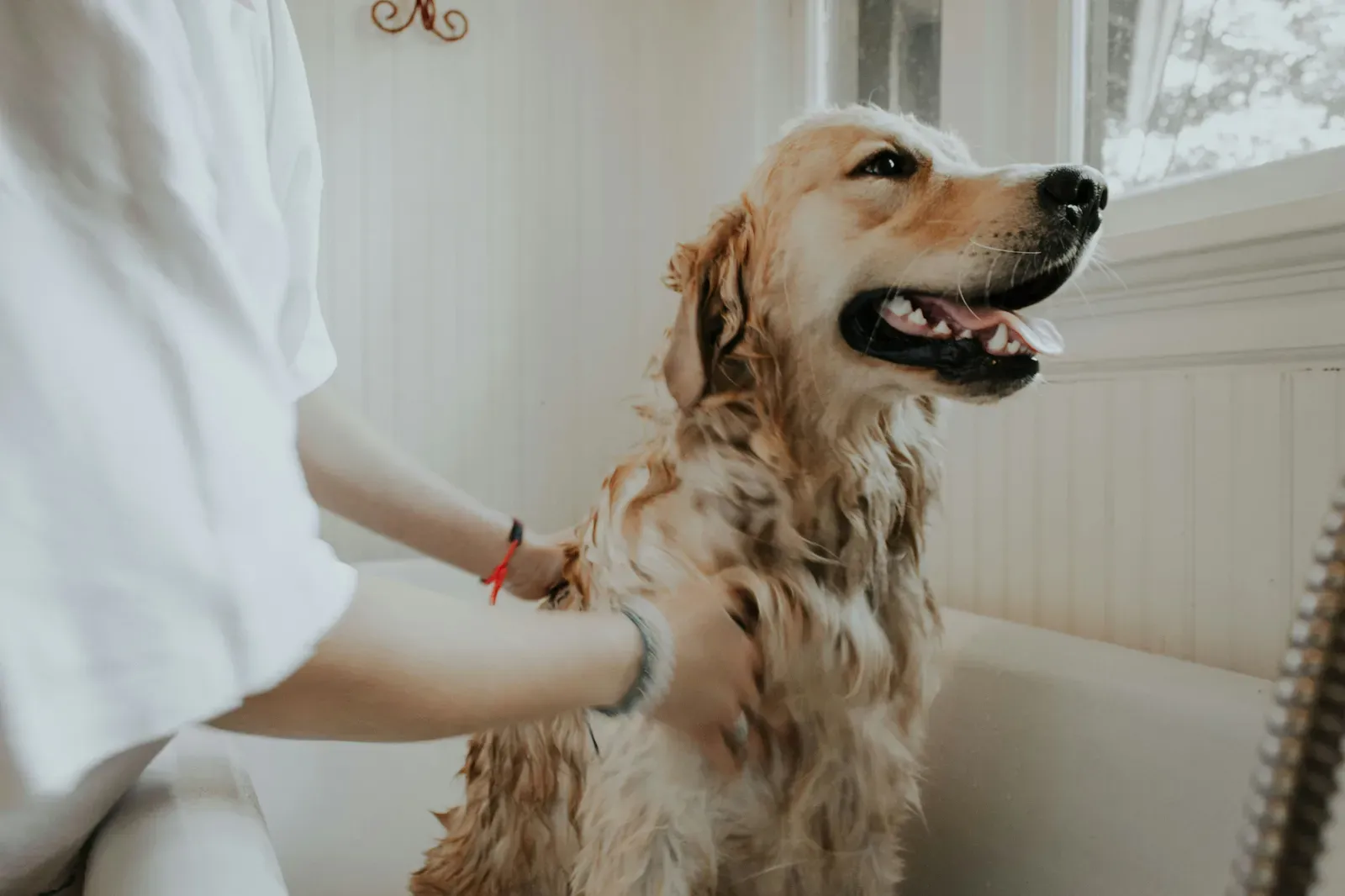
Long coats usually require more consistency than complexity. In dogs and cats, mats and tangles do not appear only because brushing was skipped. They also build up through trapped moisture, accumulated dirt, and small areas that go unchecked for too long. Once daily care becomes irregular, the coat starts to compact and home grooming becomes more uncomfortable for both the pet and the person caring for it.
The good part is that prevention is usually easier than fixing an advanced problem. A short routine, a few visual checks, and avoiding several common mistakes can make a real difference.
A basic routine to prevent mats
The foundation of long-coat care is not doing very long grooming sessions from time to time. It is repeating short actions on a regular basis. With a pet that has abundant hair, it helps to check the coat several times a week and adjust brushing frequency to how easily tangles form.
In practice, a simple routine can include three steps. First, look at the overall condition of the coat before brushing so you can notice moisture, dirt, or compacted areas. Second, work in sections and move calmly instead of dragging a brush roughly through the whole coat. Third, check at the end whether there are still points where the hair catches easily.
It also helps to inspect the coat after walks, long naps, or contact with water. Many mats do not come from one large mistake, but from several small factors that build up over time.
Common mistakes that make the coat worse
One of the most common mistakes is brushing only when the coat already has obvious tangles. At that point, grooming stops being preventive and becomes corrective, which is usually more uncomfortable. A brief and steady routine works better than an intense session once in a while.
Another frequent mistake is using a tool that does not suit the coat type or the current condition of the fur. If the brush does not reach certain layers or pulls too much, the result may be superficial or unpleasant. It is also common to insist on a mat with too much force instead of separating the hair gradually and reducing tension.
Poor moisture management also makes coat care harder. Bathing a pet and leaving moisture trapped in certain areas can make the fur clump together more easily. The same happens when one part of the body is cleaned but not dried well. The goal is not to overhandle the coat, but to avoid the conditions that help tangles form.
A final repeated mistake is neglecting less visible areas. Even when the back looks fine, mats often start first in places with friction, moisture, or less ventilation. That is why it helps to check specific points instead of trusting only a quick surface look.
Areas where mats tend to form first
High-friction areas are usually the first to cause problems. Behind the ears, around the neck, in the armpits, and on the inner legs it is common to find more compact hair. In dogs, the chest, belly, and rear area can also collect dirt or moisture after walks.
In long-haired cats, some sections may look well kept until the coat is touched closer to the skin. That is why running a hand over the surface is not enough. It helps to part the fur slightly and check whether there are small tangles that are still easy to manage.
Catching these areas early gives you room to act before the mat becomes firmer. That margin matters, because the closer compacted fur sits to the skin, the harder it is to loosen without discomfort.
Basic differences between dogs and cats
Even though prevention follows the same general principles, the context changes by species. In dogs, long coats often pick up more dirt because of outdoor walks, grass, soil, or ground moisture. That makes post-walk checks more important.
In cats, the issue is often less visible to the person caring for them, because they can look clean even when small tangled areas have already started. Some cats also tolerate grooming less well if they are not used to brushing. In those cases, gentleness and consistency are more useful than trying to solve everything at once.
When it is no longer a minor issue
Not every tangle can be handled the same way at home. If the fur is very compacted, stuck close to the skin, or causes discomfort when a specific area is touched, it is better to proceed carefully. It also matters if there is persistent odor, trapped debris, redness, or a clear pain response.
Once the problem progresses, pulling the fur or trying to cut blindly can make things worse. At that stage, asking for professional guidance is the more reasonable option. Home care should focus on prevention and maintenance, not on forcing a solution when the coat is already heavily compromised.
FAQ
How often should you brush a long-haired pet?
Brushing frequency depends on coat density, activity level, and how quickly tangles form, but in most cases checking the coat several times a week works better than waiting for visible mats. Leaving too much time between sessions usually makes grooming less comfortable and less effective.
The most practical approach is to keep the sessions short and consistent, paying extra attention to high-friction areas such as behind the ears, around the neck, in the armpits, and on the inner legs. Regular quick checks usually prevent more problems than a long grooming session done only once in a while.
Can you cut a mat at home?
It is not a good idea to improvise with scissors when the mat sits close to the skin or the area is hard to see clearly. In that situation, compacted fur can be mistaken for stretched skin, which increases the risk of an accidental cut.
If the mat is small, it is better to reduce tension patiently and decide whether it can be handled without causing pain. When the coat is heavily compacted, clearly uncomfortable, or too close to the skin, asking for professional help is usually safer than forcing a quick fix.
What happens if the coat stays damp for too long?
Trapped moisture makes the coat more likely to clump together, develop odor, and become harder to separate gently. This tends to get worse in low-airflow areas or in body zones where the coat is denser and dries more slowly.
That is why it helps to check that the coat is fully dry after a bath, a spot clean, or a rainy walk, especially near the skin. Drying well does not only improve comfort, it also lowers the chances of difficult mats forming over the following days.
What kind of brush should you use?
There is no single tool that works equally well for every coat, because the best option depends on hair density, coat length, and how sensitive the pet is during grooming. A brush that works well for one dog may be a poor fit for a cat or for a finer coat type.
The practical test is whether the tool lets you work through the coat in layers without excessive pulling and without staying only on the surface. If brushing leaves hidden areas untouched, catches too much, or causes obvious discomfort, it is better to change the tool or the technique rather than insist with more force.